Protecting Our Guests and Our Community: Disaster Preparedness at Yubana Mankai
Atagawa, Izu, is blessed with both the sea and its hot springs.
Walking through the hot spring town while listening to the sound of the waves is one of the special experiences Atagawa offers. At the same time, because this region is surrounded by the power of nature, we must always be prepared for natural disasters such as earthquakes, tsunamis, heavy rain, and landslides.
Whenever disasters occur in different parts of Japan, we are reminded of the lives affected and of the many people working tirelessly to support recovery. We sincerely hope for the earliest possible recovery of the affected communities, the safety of everyone who has been impacted, and the return of peaceful daily life.
At Yubana Mankai, we do not regard disasters as something distant from us. As a ryokan welcoming guests, a workplace for our staff, and a member of the Atagawa community, we believe it is important to think about disaster preparedness and make practical preparations every day.
Preparedness Begins in Everyday Life
To respond appropriately when a disaster occurs, preparation must begin before an emergency.
Having disaster-prevention equipment is not enough on its own. We need to know who will communicate with guests and how, which routes should be used for evacuation, and how guests and staff inside the ryokan will support one another. These procedures must be confirmed in advance and practiced in real situations.
Yubana Mankai conducts in-house disaster-prevention training twice a year. Through these exercises, we review the conditions inside the ryokan and check our procedures for evacuation guidance and information sharing. During a disaster, actions that are normally simple may become difficult because of a power outage, confusion, or damage to surrounding infrastructure. That is why regular practice is important.
We also display information about evacuation sites inside the ryokan. We want guests to be able to check where they should evacuate during their stay, using information presented as clearly as possible.
Disaster Training in Cooperation with the Local Community
A ryokan cannot prepare for disasters on its own.
Atagawa is home to local residents, workers, businesses, and visitors, as well as accommodation facilities like ours. In an emergency, each part of the community must share information and cooperate from its own position.
Yubana Mankai also participates in community disaster-prevention training twice a year. We confirm local evacuation procedures and evacuation roads, and consider preparedness as something that extends beyond the walls of our ryokan.
Building relationships with people in the community during normal times makes it easier to communicate and help one another in an emergency. In particular, our owner is involved in an organization dedicated to regional disaster preparedness and crime prevention, and contributes to the local community on a daily basis. Through these ongoing activities, we continue to consider the role our ryokan can play as a member of Atagawa.
Collecting Accurate Information and Sharing It Quickly
One of the most important steps during a disaster is confirming accurate information.
A wide range of information circulates on social media and the internet. However, information with unverified sources or unclear details may also be mixed in. At Yubana Mankai, we monitor weather information, announcements from local authorities, and transportation updates in order to understand the situation.
We then share the information guests need as clearly as possible. This may include transportation conditions, evacuation information, and the situation in surrounding areas—information that guests may need in order to make decisions during their stay.
Collecting information is not enough. It must be shared among staff, communicated to guests, and updated when circumstances change. We are committed to real-time information gathering and communication so that guests can act as calmly and safely as possible.
Guiding Guests to Safety When Evacuation Is Necessary
Depending on the type and severity of a disaster, remaining inside the ryokan may not always be the safest option.
If evacuation is considered necessary, we will guide guests toward a safe evacuation site using the evacuation roads identified by the local community. Staff will assess the situation and do their best to help guests move calmly and safely.
For international visitors and guests visiting Atagawa for the first time, it may not be obvious where to go in an emergency. We will take language and cultural differences into consideration and provide guidance as clearly as possible.
However, the safest response depends on the actual weather and damage conditions at the time. We will prioritize the situation on the ground and instructions from public authorities such as the local government, fire department, and police, and choose the safest available course of action.
Considering the Safety of Guests, Staff, and Local Residents
At Yubana Mankai, the safety of our guests is our first priority.
At the same time, our staff must also be safe in order to support guests. We will confirm the condition of the building and take necessary action while ensuring the safety of our employees.
If a major disaster affects the local community, we will also consider what our ryokan may be able to do. On the condition that safety has been secured, we plan for the possibility of receiving guests, staff members, and local residents, and will respond within our capabilities according to the circumstances in the area.
This does not mean that we promise unconditional acceptance in every situation. We will make decisions in cooperation with the local community and relevant organizations after considering the scale of the disaster, the safety of the building and surrounding area, instructions from authorities, and the type of support required.
Continuing to Prepare as a Member of Atagawa
Disaster preparedness is never complete.
Even after training has been conducted, an actual disaster may bring circumstances that were not anticipated. For this reason, it is important to review the lessons learned after each exercise, reassess our information-sharing methods and evacuation routes, and continue making improvements.
Yubana Mankai is a place where guests come to enjoy the hot springs and rest their bodies and minds. To provide a safe stay, however, we also need the unseen preparations that support those peaceful moments.
We want everyone visiting Atagawa in Izu to experience the area’s nature and hot springs with peace of mind. As a member of the local community, we will continue to work on disaster preparedness in everyday life and aim to be a ryokan where people can act calmly when an emergency occurs.
While keeping in our thoughts the communities that have suffered serious damage from disasters, we will continue making the preparations we can in our own community.
If a Disaster Occurs During Your Stay
If an earthquake, tsunami, heavy rain, or another emergency occurs during your stay, please first check the instructions from our staff. Follow announcements inside the ryokan and guidance from our team, and try to remain calm.
Transportation services and local-government information may change as conditions develop. Until safety has been confirmed, please do not travel on your own without checking the latest information. If evacuation becomes necessary, our staff will provide guidance on where to go and how to reach the evacuation site.
Yubana Mankai continues its disaster-preparedness efforts during normal times so that guests can enjoy their journey with greater peace of mind.
Learn more about Yubana Mankai in Atagawa, Izu
We Had Such a Wonderful Trip—So Why Does Monday Feel So Difficult?
Understanding the Quiet Emptiness After a Holiday
The day after returning from a trip, you may suddenly feel your energy disappear.
During the journey, you were genuinely happy. You enjoyed delicious food, admired beautiful scenery, and relaxed in a hot spring. But once you return home, unpack your luggage, and step back into your usual routine, Monday can suddenly feel rather frightening.
“It was such a wonderful trip—and now it is already over.”
That feeling is not unusual at all.
Sometimes, “It Was Fun” Is Not Quite Enough
I sometimes feel this way myself after returning from a trip.
The trip was enjoyable. There is no doubt about that. And yet, I may find myself thinking: “I have not really changed since before I left.” When that happens, everyday life can feel a little heavier from the following day onward.
Of course, a trip does not need to produce a major result. You do not have to bring home an answer that changes your life. Travel does not need to become a form of self-improvement or a serious personal-development exercise.
But perhaps the feeling after returning home can be different when you discover just one small thing during the journey.
A Small Discovery Can Change Tomorrow
For example, you may taste a seasonal ingredient during a meal and realize, “This is the season when this food is at its best.”
That small discovery can subtly change the way you see everyday life after returning home. You may want to look for another seasonal ingredient at your local market. The next time you go grocery shopping, you may notice the changing seasons a little more carefully. Something you experienced during your trip remains quietly within your daily life.
The same can be true of a hot spring.
Rather than simply thinking, “That felt good,” you may feel as though your body has been filled with energy. Your shoulders relax, and you realize that your body was more tired than you had known. Once you notice that feeling, you may begin treating yourself a little more carefully after returning home.
Travel is not only a way to escape from everyday life. It can also be time spent bringing something back to the person you become when you return to it.
Conversations Between Two People Can Offer a New Perspective
When you travel as a couple, the conversations you share along the way can be just as important as the places you visit.
Many couples are busy with work, housework, or raising children. Even when they are physically in the same place, they may each be looking at their own smartphone. They are together, but they do not always feel truly connected.
A journey creates space for conversation: while driving or traveling to your destination, over a meal enjoyed slowly, or after stepping out of a private hot spring bath. It can become a chance to talk about things that everyday life rarely allows time for.
You may want to discuss something serious. Or you may simply want to return to the light, ordinary conversations you once had.
Sometimes, hearing your partner’s words helps you notice something you had never understood before. Simply learning, “So that is how you have been feeling,” can gently change the time you spend together after returning home.
With that kind of discovery, Monday is no longer only the day when ordinary life resumes. It can become the day when you begin thinking about how to carry something you found on your journey into the days ahead.
Receive Energy from the Hot Springs of Atagawa
At Futari no Yuyado Yubana Mankai, we do not want your stay to be a rushed attempt to visit every sightseeing destination.
We hope you will enter the hot spring and feel energy returning to your body. Taste a seasonal meal and notice the character of the ingredients. Walk through the hot spring town, listening to the sound of the waves and watching steam rise from the streets. And, above all, take time to talk with the person beside you.
Atagawa, on the Izu Peninsula, may not offer only the kind of spectacular scenery that belongs on a list of the world’s most famous views. But the warmth of the hot springs, the sound of the sea, and the streets where steam rises into the air can stay with you long after you leave.
The memory may not be simply, “I saw something amazing.” It may be the quieter feeling that “something was truly restored within me.”
Find a Place Where You Can Recharge
When it is time to leave a trip, you may feel reluctant to go home.
That feeling is not only because the journey has ended. It may also be because you have to leave a place where you had finally begun to recover and return to everyday life once again.
At Yubana Mankai, we do not think of your stay as merely one night and two days at a hotel.
We hope you will discover a place where you can think:
“When I come here, I can recharge again.”
A hot spring you remember when you are tired. A room that brings back the conversations you shared as a couple. A place where, when you recall the sound of the waves and the rising steam, you find yourself thinking, “Let’s come here again.”
It would make us truly happy if Atagawa could become that kind of place for you.
Toward a Tomorrow When It Feels All Right to Keep Going
The emptiness you feel after a trip may not be proof that the journey was incomplete.
It may instead be a sign that, during the trip, your body and mind were finally able to let go. Sometimes, it is only after returning home that you realize how hard you had been pushing yourself every day.
That is why, on your next journey, we hope you will look for one small thing that goes beyond simply saying, “We had fun.”
Notice a seasonal ingredient. Receive energy from the hot springs. Share a conversation with your partner that connects to the days ahead.
And find a place that allows you to say:
“We have found a place where we can recharge.”
“So it is all right for us to keep going, even when life asks us to push ourselves.”
Futari no Yuyado Yubana Mankai hopes to be a ryokan where you can spend that kind of time.
As an adults-only ryokan with just 16 rooms, we offer a quiet setting where you can enjoy the hot springs, taste the seasons, and rediscover time together. It is perfectly fine to feel a little reluctant to leave. Sometimes, that sense of longing becomes a memory that supports you when you return to everyday life.
Take a journey that stays with you at Yubana Mankai
Beyond the Ryokan Dinner: How to Enjoy Atagawa Onsen at Night
A night in Atagawa Onsen does not have to end with dinner and a bath at your ryokan.
Of course, soaking in the fresh hot spring water and enjoying a seasonal dinner at Futari no Yuyado Yubana Mankai are important parts of the Atagawa experience. Yet, if you step outside after dinner, even for a short walk, you will discover a different side of the town.
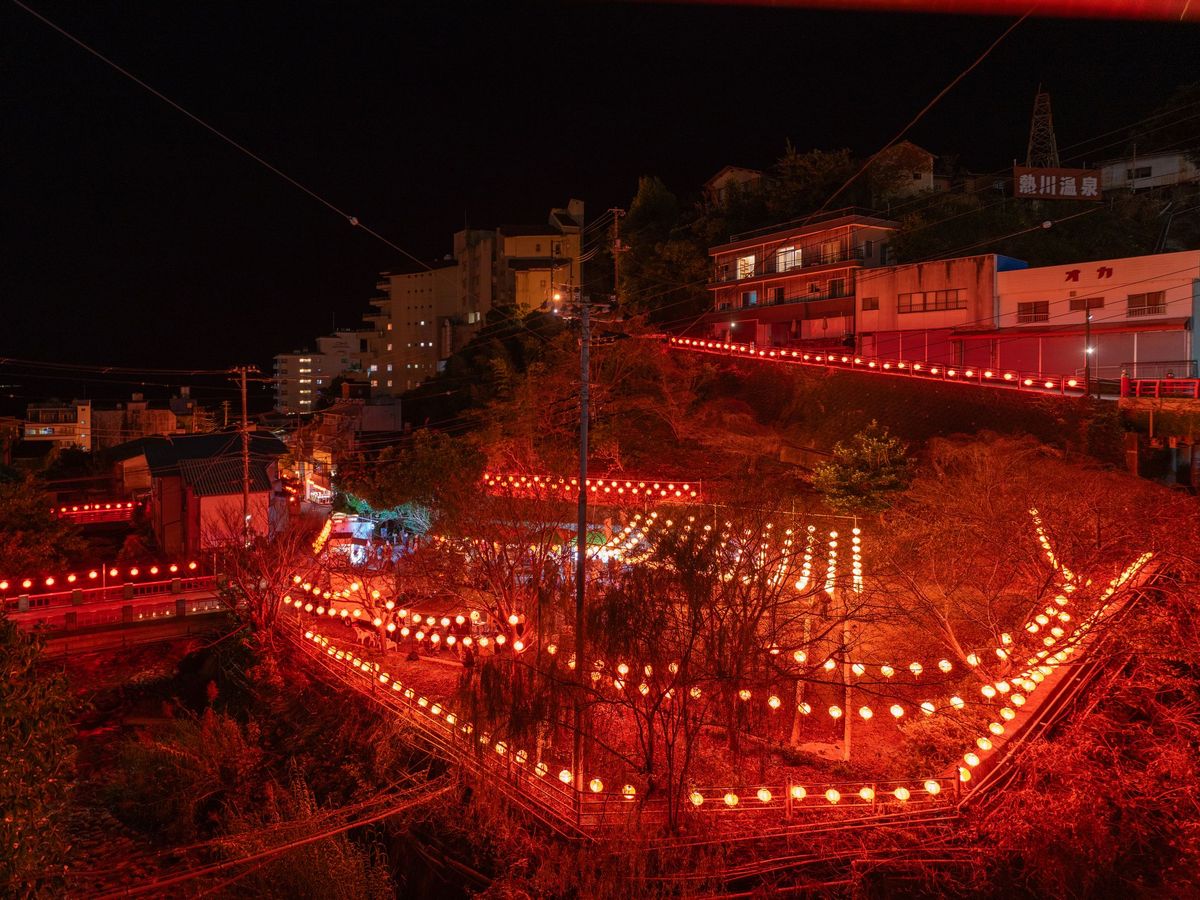
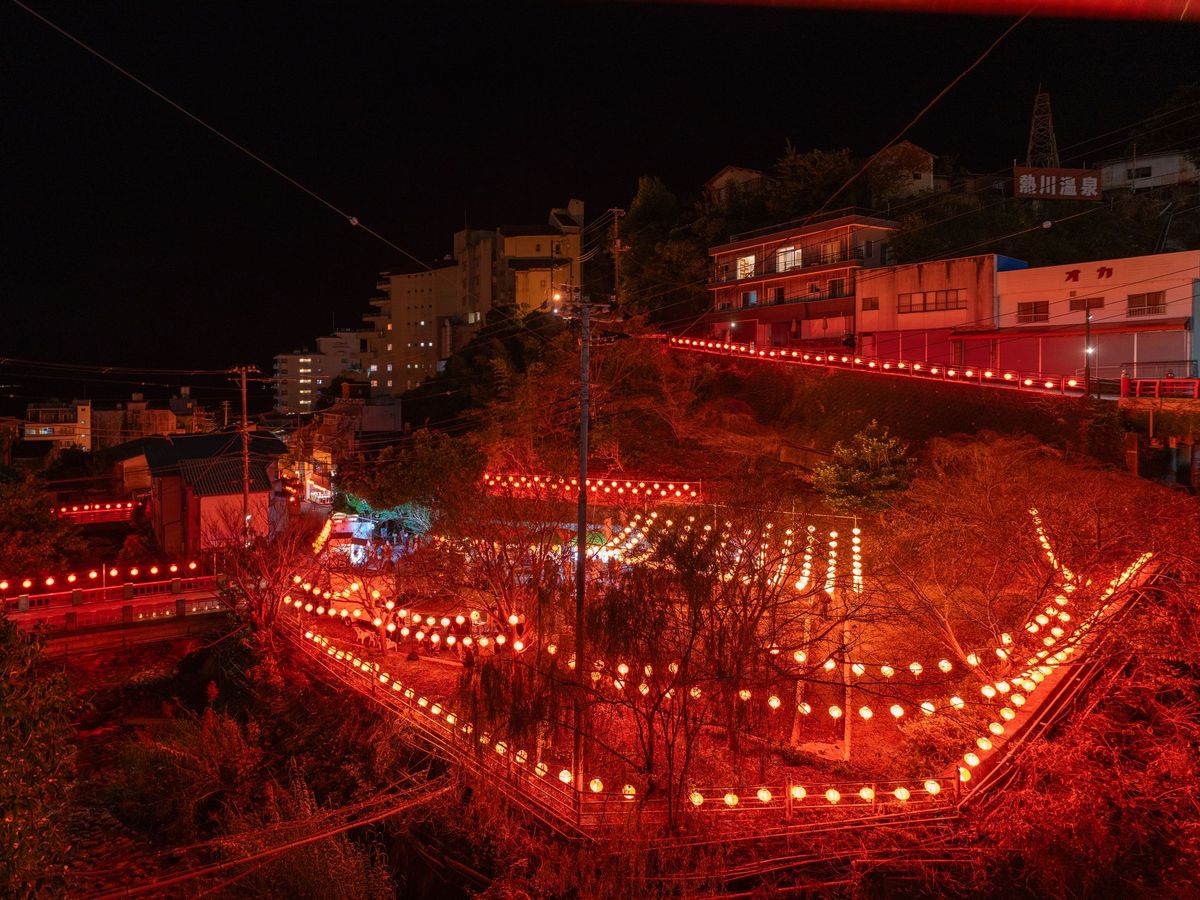
Lanterns glowing through the steam, the sea at the end of a hillside street, local restaurants, small snack bars, and live music: Atagawa has an evening that belongs not only to visitors, but also to the people who live here.
Begin with lanterns, steam, and a hillside walk
Atagawa Onsen is a hot spring town built on hills leading down toward the sea. Steam rises from the hot spring towers, and lanterns illuminate the streets after sunset.
Through its friendship with Jiufen in Taiwan, Atagawa has developed a distinctive lantern-lit nightscape. The combination of warm lantern light, rising steam, sloping streets, and the sound of the Pacific gives the town a nostalgic atmosphere.
Leave Yubana Mankai and walk slowly through the hot spring town. Stop near a hot spring tower, listen for the ocean, and notice the quiet presence of people moving through their own evening. This is not a staged attraction; it is part of Atagawa’s everyday character.
Some streets are steep and dim at night. Wear comfortable shoes, watch your footing, and do not feel that you must walk all the way down to the coast.
Enjoy local food and lanterns at the Atagawa Yuke-muri Night Market
If your stay coincides with an event date, the Atagawa Yuke-muri Night Market is especially worth visiting. The next scheduled dates are September 19–20 and November 21. The venue is Atagawa Hana Hana Park.
Local Izu food and Taiwanese food are served beneath the lanterns and steam of the hot spring town. Please ask the front desk at Yubana Mankai whether the event is being held during your stay. Our staff can also explain how to reach the venue and what the atmosphere is like that evening.
Depending on your dinner plan, you may visit before dinner, or take a gentle walk after finishing your meal at the inn. The choice is yours.
Where to have dinner outside the ryokan
Some travelers want to experience a local restaurant rather than eat at their ryokan every night. In Atagawa, we recommend Nishiki, Oboro, Kimagure, and Osakana OTO.
Nishiki: a popular restaurant and its famous horse mackerel rice bowl
Nishiki is one of Atagawa’s best-known restaurants. It is particularly popular with visitors, so reservations are essential. Its signature dish is an aji-don, a rice bowl topped with local horse mackerel. It is a dish we especially hope international guests will try in Atagawa.
The staff can provide multilingual assistance, making Nishiki a reassuring choice for travelers who may feel uncertain about ordering in Japanese or navigating a local restaurant.
Oboro: an authentic Japanese izakaya in a hot spring town
International travelers often look for an authentic Japanese izakaya. Atagawa has one: Oboro.
From carefully prepared kushiyaki grilled skewers to set meals, the menu offers the kind of satisfying, informal food that makes an izakaya evening special. Enjoy a drink, share several dishes, and experience the atmosphere of a local Japanese night out.
Kimagure and Osakana OTO: share the evening with local people
If you would like to enjoy an evening among both local residents and visitors, consider these two restaurants.
Choose Kimagure when you feel like eating meat, and Osakana OTO when you are in the mood for fish. Rather than looking for a restaurant designed only for tourists, spend an evening where people actually gather, eat, and talk in Atagawa.
For a deeper experience: Atagawa after dinner
For travelers who want to experience a more local side of the town, there are three further options: Snack Tonbo, Bouquet, and beehouse. This is where Atagawa becomes less like a sightseeing destination and more like a place with its own local night culture.
Snack Tonbo: where the night gathers
After drinking in Atagawa, people often gather at Tonbo. Enjoy karaoke and drinks together with local regulars; it is the kind of place where an evening naturally continues.
I have personally found myself, almost without noticing how it happened, singing karaoke with my arm around the shoulders of guests from overseas. Even when every word is not understood, music and drinks can create a shared moment. That spontaneous warmth is part of Atagawa at night.
Bouquet: a new presence in Atagawa
Bouquet is a relatively new establishment, but its creative events and ideas have quickly attracted more and more fans. It is a good choice for travelers who want to discover a newer side of Atagawa’s evening culture.
beehouse: connect through live music
Live performances are held on some days at beehouse. When there is a live event, people who love music gather and the venue becomes lively. If music is part of your ideal evening, check whether a performance is scheduled during your stay.
A relaxed evening itinerary from Yubana Mankai
| Time |
Suggested plan |
| Early evening |
Dine at Yubana Mankai, or visit Nishiki, Oboro, Kimagure, or Osakana OTO |
| After dinner |
Walk through the lantern-lit hot spring town |
| Night market dates |
Visit the Atagawa Yuke-muri Night Market at Hana Hana Park |
| Later evening |
Visit Snack Tonbo, Bouquet, or beehouse |
| Before bed |
Return to Yubana Mankai and enjoy a private hot spring bath |
You do not need to do everything. Choose an outside restaurant on one night, visit only the night market on another, or simply take a short walk before returning to your private bath. Atagawa is best enjoyed at your own pace.
Feel the local time of Atagawa
Atagawa’s night is not about spectacular entertainment.
It is about walking beneath lanterns, watching steam rise from the hot spring towers, tasting aji-don at Nishiki, enjoying kushiyaki and set meals at Oboro, sharing an evening with local people at Kimagure or Osakana OTO, singing karaoke at Snack Tonbo, and discovering new music and new energy at Bouquet or beehouse.
These small experiences create a memory of Izu Atagawa that cannot be gained by simply passing through a sightseeing spot.
Futari no Yuyado Yubana Mankai is an adults-only ryokan with only 16 rooms. We hope you will experience not only the inn, but also the hot spring town around it.
After dinner, step outside for a little while. Beneath the lanterns, talk about what you saw that day or what you hope to do tomorrow. That, too, is an important part of an evening in Atagawa.
Information for international travelers
Restaurants in Atagawa may not stay open as late as restaurants in Tokyo or Osaka. Please ask the front desk at Yubana Mankai on the day of your stay about restaurant opening hours and whether the night market is being held.
At night markets and snack bars, please be considerate of local residents and other guests. Ask before taking photographs of people or interiors, and never drive after drinking.
Atagawa has many slopes, and some areas are dim at night. Wear comfortable shoes and avoid walking in strong winds or bad weather.
Stay at Yubana Mankai and discover the quiet night of Atagawa
WordPress tags: Atagawa Onsen Nightlife, Atagawa Onsen Restaurants, Nishiki Atagawa, Oboro Atagawa, Osakana OTO, Kimagure Atagawa, Atagawa Evening Walk, Atagawa Yuke-muri Night Market, Atagawa Lanterns, Snack Tonbo, Bouquet Atagawa, beehouse Atagawa, Atagawa Onsen Live Music, Izu Nightlife, Japanese Izakaya, Private Onsen Japan, Yubana Mankai
Schedules, opening hours, events, and payment methods may change. Please ask the front desk at Yubana Mankai for the latest information during your stay.
Stay Two Nights in Atagawa: A Southbound 3-Day Izu Itinerary
If you are visiting the Izu Peninsula, changing hotels every night is not the only way to see more. A more comfortable approach is to stay in one hot spring town, leave your luggage in one place, and explore at a relaxed pace.
This two-night itinerary uses Futari no Yuyado Yubana Mankai in Atagawa Onsen as your base. Travel south toward Inatori, Kawazu, and Shimoda, while enjoying the coastal scenery and everyday life visible from the Izu Kyuko Line. Save Izu Kogen and the Jogasaki Coast for your arrival or departure journey.
Rather than trying to see everything, choose your destinations according to the season, weather, and transport conditions.
The itinerary at a glance
| Day |
Route |
Theme |
| Day 1 |
Arrive in Atagawa → hot spring town → Yubana Mankai |
Train views, steam, lanterns, and a ryokan evening |
| Day 2 |
Inatori Morning Market → hanging hina dolls → Kawazu or Shimoda |
Local life, tradition, and geopark landscapes |
| Day 3 |
Slow morning in Atagawa → departure; optional northern stop |
The afterglow of the onsen town and Izu scenery |
Day 1: Meet Izu through the train window
Travelers arriving from Tokyo generally travel via Atami before continuing toward the Izu Kyuko Line. Exact travel times and connections depend on the date and train service, so please check the official JR East and Izukyu information before departure.
The journey on the Izu Kyuko Line is not merely transportation. Look for the blue Pacific Ocean, small fishing ports tucked into coves, houses built on green slopes, fields, and local roads. Alongside the famous scenery, you can see the warmth of places where people actually live.
After arriving at Izu-Atagawa Station, leave your luggage at Yubana Mankai and take a first walk through the hot spring town. A station shuttle may be available between 2:30 p.m. and 5:00 p.m.; please contact the inn when making your reservation to confirm the current arrangements.
Look for steam rising from the onsen towers, lanterns glowing along the streets, and the sound of the Pacific Ocean. In the evening, warm yourself in one of the inn’s private onsen baths and enjoy dinner featuring local ingredients.
Day 2: From Inatori’s morning market to southern Izu’s landscapes
On Day 2, head south from the morning onward. We do not recommend rushing through Inatori, Kawazu, and Shimoda simply to check them off a list. Choose your destinations according to the season, your interests, and the day’s transport conditions.
Morning: Feel the atmosphere of Izu at Inatori’s Morning Market
If you are comfortable starting early, visit the Inatori Morning Market. The market features agricultural products, seafood, processed foods, and other local products from Higashiizu Town. It is a place to notice the food and human presence of a fishing town.
Official information lists the venue as the first floor of the Higashiizu Town Office multi-story parking lot and the hours as 8:00 a.m. to noon. Opening days and details may change, so please check the latest official information before visiting.
Late morning: Discover the wishes preserved in hanging hina dolls
If you visit Inatori in early spring, make time for its tradition of hanging hina dolls. Inatori is known as the birthplace of this tradition, which has been passed down since the Edo period.
Small handmade ornaments are displayed beside the hina-doll platform, expressing wishes for the healthy growth of girls. The tradition has been passed from mother to daughter and from daughter to grandchild. Each ornament reveals that travel in Izu is not simply about seeing things; it is also about encountering the hopes of local families.
Festival dates, exhibition venues, and admission details vary by year. Please check the official Higashiizu Town or Inatori Onsen information before traveling.
Afternoon: Kawazu Cherry Blossoms or a full day in Shimoda
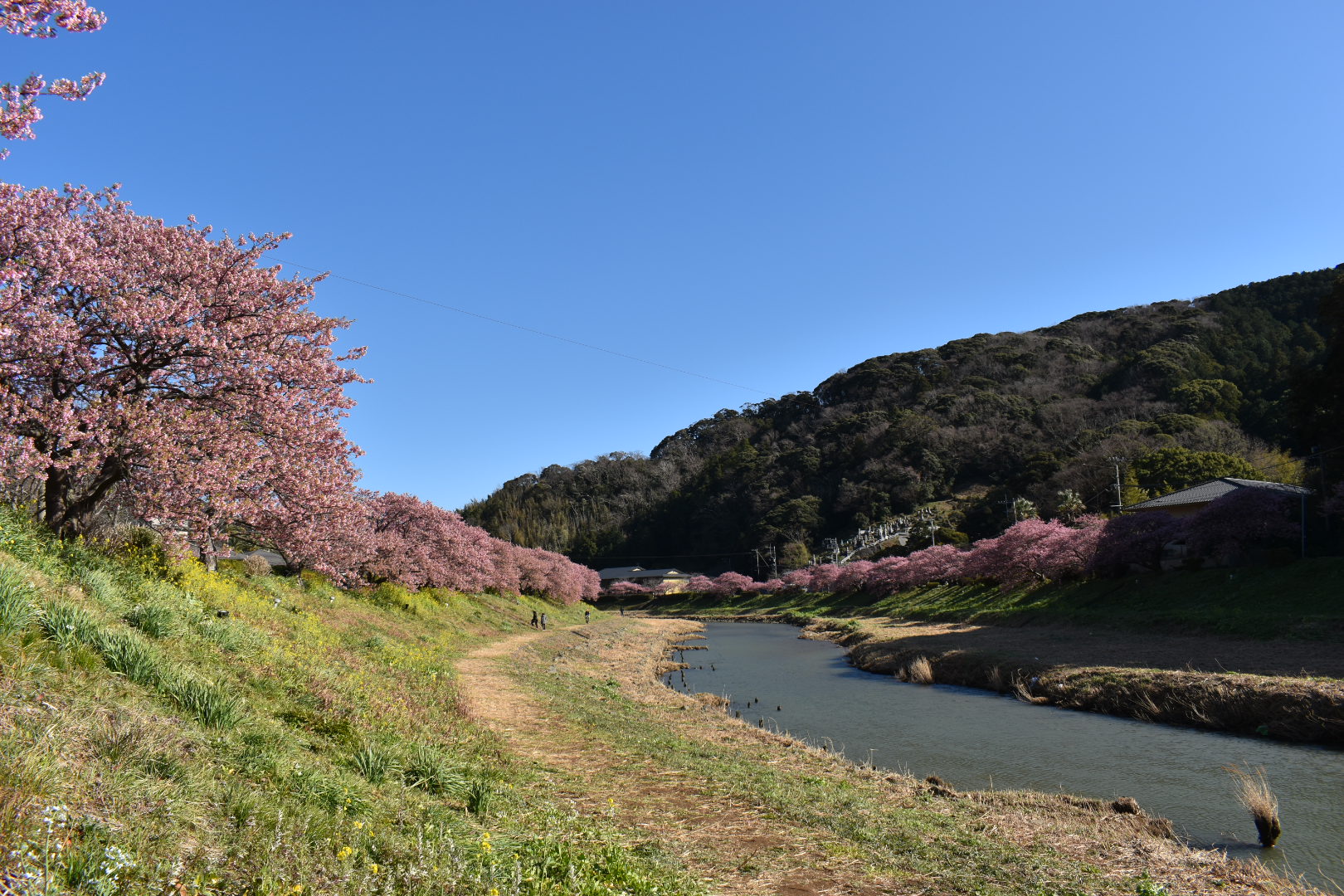
During the Kawazu Cherry Blossom season, walk beside the Kawazu River and enjoy the famous early blossoms. Blooming dates and festival crowd levels vary each year, so check the latest official information before traveling. After Kawazu, return to Yubana Mankai without having to move your luggage into the busiest area.
Outside the cherry blossom season—or if you would like to travel farther south—make Shimoda the main destination for the day. Shimoda is not simply a seaside town. It is a place where volcanic landscapes, clear water, fishing-port culture, and the history of Japan’s opening to the world meet. The town is part of the Izu Peninsula UNESCO Global Geopark, giving the landscape a deeper story beyond its beauty.
For a nature-focused route, choose Ryugu Sea Cave and Cape Tsumeki. Ryugu Sea Cave is a remarkable sea cave whose roof has opened to create a natural skylight. A trail above the cave offers a different perspective, including a place where the landform looks heart-shaped. At Cape Tsumeki, enjoy the meeting of rugged coastal landforms, open ocean, and seasonal vegetation. These are places to experience with your eyes, but also with the sound of wind and waves.
For a history-and-townscape route, walk Perry Road and visit Ryosenji Temple. Perry Road follows the route taken by Commodore Perry’s party on their way to Ryosenji during the negotiations that led to the Shimoda Treaty. Along the Hirana River, the approximately 500-meter stone-paved street is lined with traditional Izu-stone buildings, namako wall patterns, willow trees, stone railings, and old-town details. In the evening, gas lamps give the street a particularly atmospheric character.
Ryosenji Temple stands at the end of this historical story. Nearby, the Shimoda Museum of the Black Ships, MoBS, and Chorakuji Temple offer further ways to understand the period when Shimoda became Japan’s gateway to international exchange. If you prefer to experience the modern life of the port town, visit Kaikoku Shimoda Minato or consider an Izu Cruise, subject to the day’s operating schedule.
If you travel as far as Shimoda, do not try to fit Ryugu Sea Cave, Cape Tsumeki, Perry Road, and every museum into one rushed afternoon. Choose a nature route or a history route, select one or two main places, and leave time to pause. In Izu, the journey itself takes time, and that is part of the experience. At the end of the day, return to Atagawa and enjoy the quiet atmosphere of Yubana Mankai.
Day 3: Enjoy an Atagawa morning, then explore the north on your way out
On your final morning, take a bath before or after breakfast, listen to the ocean, and reflect on the journey.
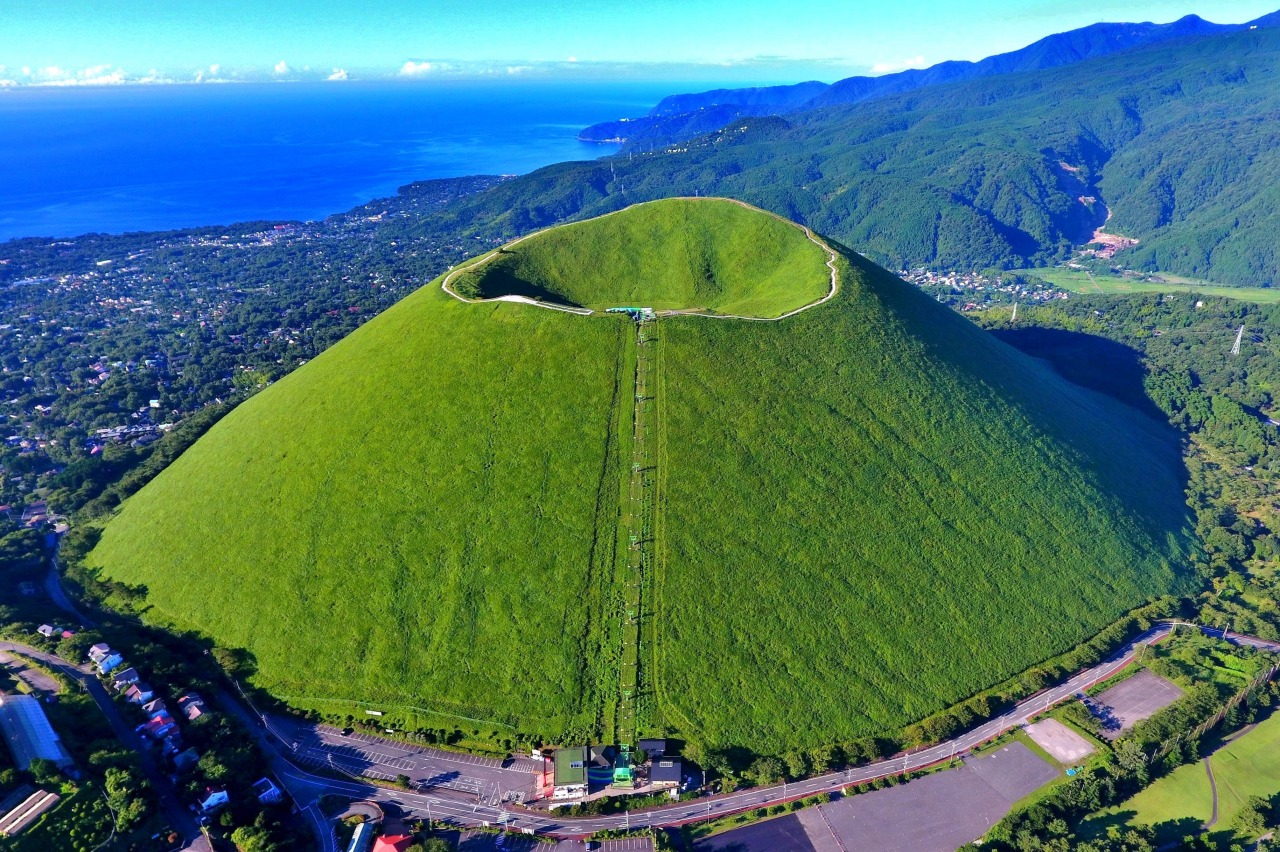
If your departure schedule allows, add Izu Kogen or the Jogasaki Coast as a stop on your way out. You can also visit the northern side of Izu on your way into the peninsula. Placing the northern scenery at the beginning or end creates a pleasant contrast with your southbound day. Always allow plenty of time to reach your train or other connection.
Practical advice for international travelers
Public transportation in Izu is less frequent than in Tokyo or Osaka. Check train and bus timetables, seasonal services, and possible weather-related changes before departure and again on the day of travel. JR East, Izukyu, and each attraction’s official website are the best places to confirm current information.
Markets, restaurants, and seasonal events may have limited opening days or hours. If the Inatori Morning Market, the hanging hina-doll exhibitions, or the Kawazu Cherry Blossoms are important to your trip, check the latest information before traveling.
At a Japanese ryokan, you may be asked to remove your shoes indoors, and meal or bathing times may be arranged in advance. If anything is unfamiliar, please feel free to ask the inn when booking or at check-in.
Do not rush through Izu—travel south from an Atagawa base
The Izu Peninsula is more than a collection of viewpoints. It is the ocean and human life seen from the Izu Kyuko Line, the local produce and seafood at Inatori’s morning market, the family wishes represented by hanging hina dolls, the geological story revealed by Shimoda’s landscapes, and the steam and hot springs waiting in Atagawa at the end of the day.
Futari no Yuyado Yubana Mankai is an adults-only ryokan with only 16 rooms. With six private onsen baths and a quiet atmosphere, the inn is part of the Izu experience itself—not merely a place between sightseeing stops.
Make the second day your southbound day, and enjoy northern Izu when you arrive or depart. By using Yubana Mankai as your base, you can keep your suitcase in one place and experience Izu at your own pace.
Visit the English Website and Book Your Stay
References
Beyond Hakone: A Vast Ocean-View Sea of Gold
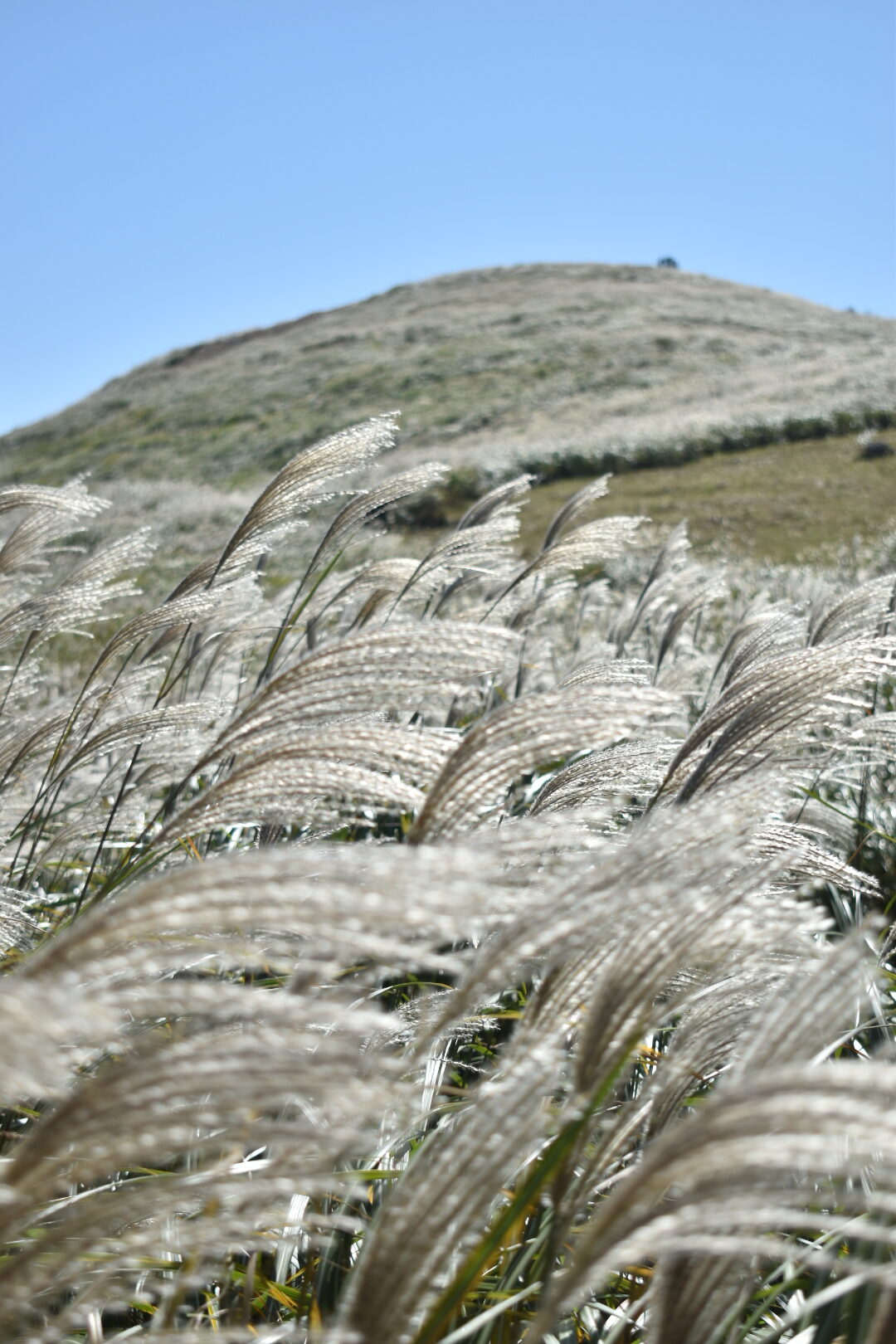
When autumn arrives in Japan, many travelers immediately think of the famous pampas grass fields in Hakone’s Sengokuhara. However, located right here in East Izu, the Hosono Highlands (Hosono Kogen) offers a breathtaking landscape that dwarfs Hakone in both scale and beauty.
Imagine standing amidst a sweeping, boundless grassland where a crisp autumn breeze brushes past your face. As you open your eyes, your entire field of vision is filled with rolling waves of golden pampas grass, set against the sparkling blue backdrop of the Pacific Ocean. There is simply no other place where you can experience such an open, dynamic coastal highlands panorama.
Climbing to Mt. Misugi: The Reward of the Summit
To truly experience the magic of Hosono Highlands, we recommend hiking all the way up near the summit of Mt. Misugi.
While it requires a pleasant walk, the “satisfying fatigue” of climbing under your own power makes the ensuing view infinitely more rewarding. Looking down from the peak, the sweeping expanse of Sagami Bay paired with the shimmering silver-gold grass creates a deeply moving masterpiece of nature that washes away the stress of daily life.
Tip for travelers: Autumn in the highlands can be brisk. For a comfortable hike, we recommend wearing long sleeves, long trousers, and sturdy walking shoes.
Enjoying All of East Izu: Morning Highlands, Evening Atagawa
This magnificent autumn event is not just an attraction of Inatori; it is a collaborative celebration embraced by the entire East Izu region.
To truly savor East Izu, limiting your trip to just one town would be missing out. After enjoying the crisp, invigorating morning air among the highlands, we invite you to journey down to Atagawa Onsen for the evening.
Recharging Your Energy in Atagawa’s Powerful Onsen
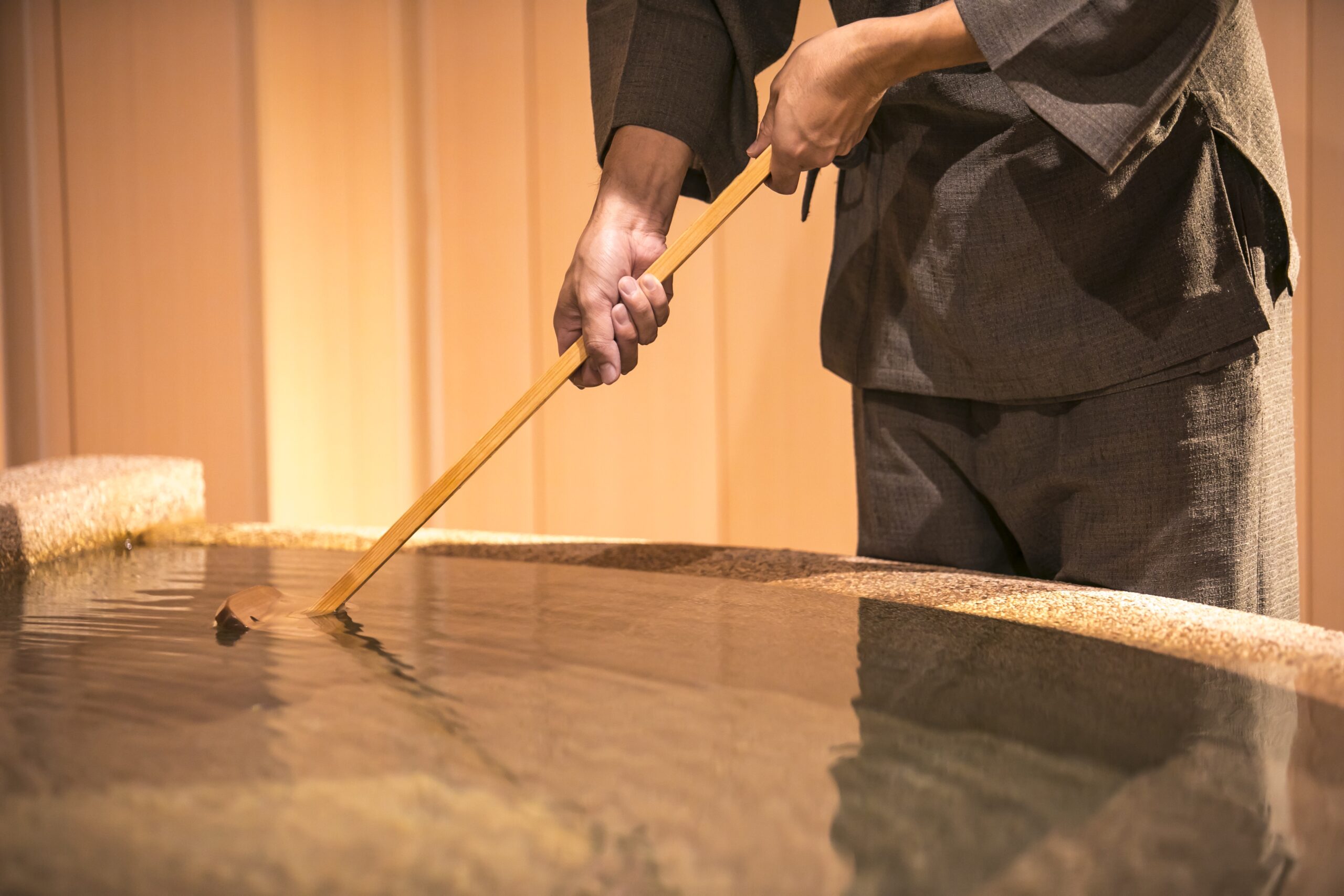
After a day of active hiking and breathing in the crisp mountain air, your body will be ready to unwind. What awaits you at our inn, “Futari no Yuyado Yubana Mankai,” is the restorative power of Atagawa’s 100°C natural, free-flowing hot springs.
The pure, high-temperature waters we protect as Yumori (Hot Spring Guardians) wash away not only the physical fatigue of the hike but also the accumulated stress of everyday life. More than just relaxation, the potent energy of our springs revitalizes your core, filling you with fresh vitality for the days ahead.
Embrace the panoramic grandeur of nature by day, and surrender to the quiet intimacy of lantern-lit hot spring baths by night. Why not treat yourself to the ultimate East Izu autumn journey this season?
Book Your Autumn Onsen Getaway
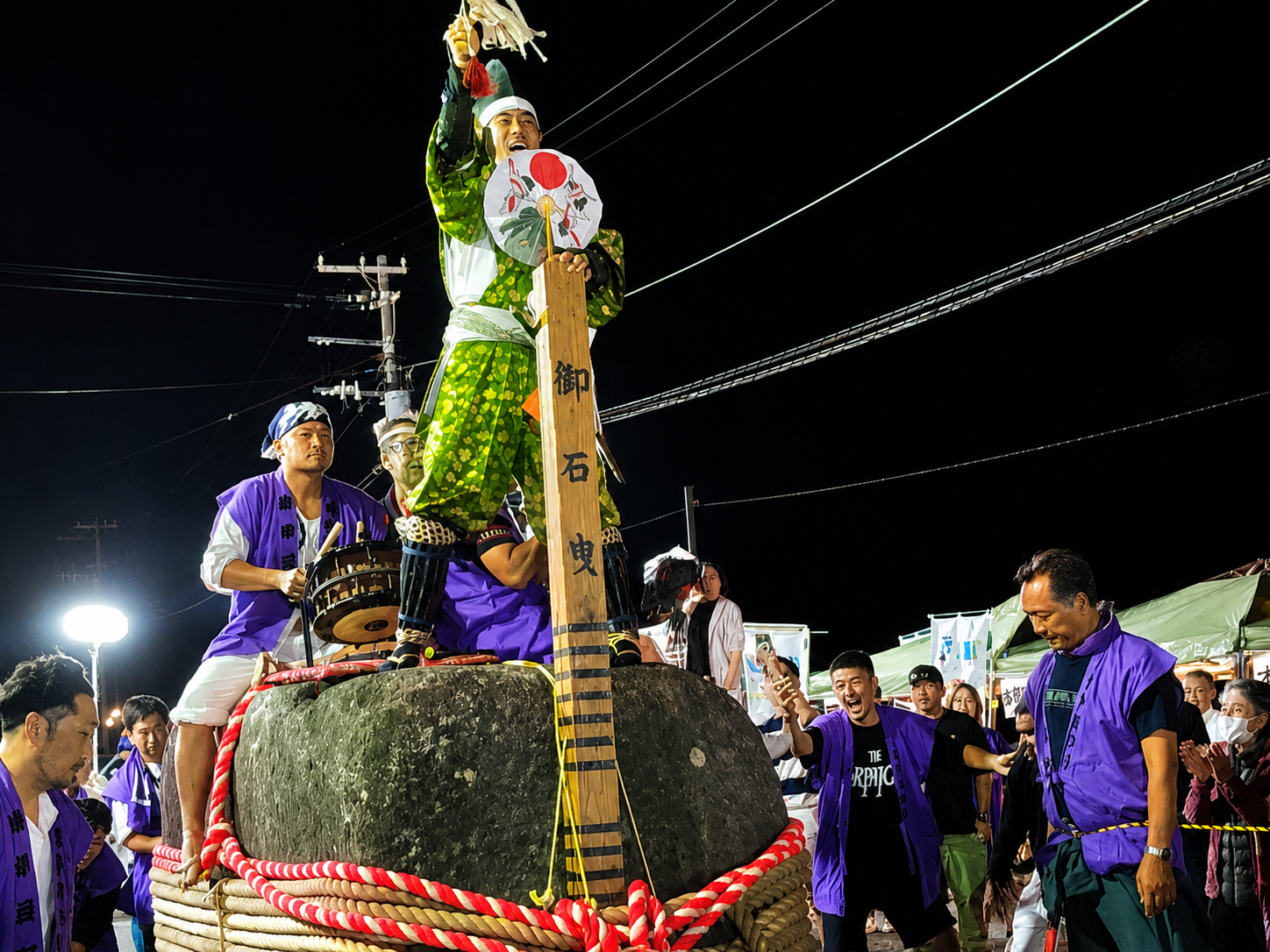
Where Festive Energy Meets Serene Luxury
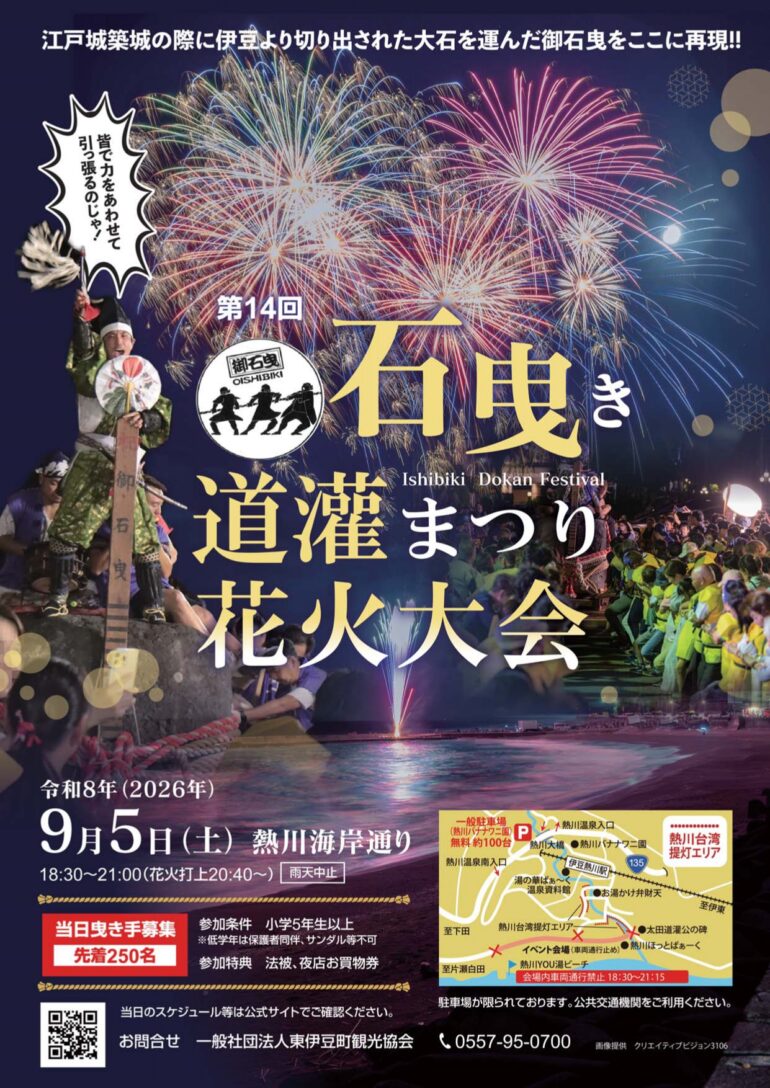
Every year, Atagawa Onsen bursts into a powerful wave of excitement and historic tradition during the Ishibiki Dokan Festival—the town’s most anticipated celebration, honoring the legendary samurai and castle builder Ota Dokan.
The festival’s centerpiece is the hauling of massive, multi-ton stone pillars using thick ropes, where both locals and visitors pull together in unison. Conveniently, our inn, “Futari no Yuyado Yubana Mankai,” is located just a short walk from the heart of the action.
“I want to experience the festival excitement, but I also want peaceful, private time with my partner.”
If that is what you are looking for, Atagawa—and our intimate inn—offers the ultimate combination.
“When Everyone’s Hearts Beat as One, the Stone Moves” — A Former Samurai General’s Insider Tips
Not many know this, but I (the owner of Yubana Mankai) once had the honor of serving as a Samurai General (Samurai-Taisho) leading this very festival. Standing before the gathered crowd, inspiring everyone to give their all, and feeling that surge of collective energy is an experience I will never forget.
As a former Samurai General and a proud local, here is my top advice for experiencing the festival to its fullest:
1. Don’t just watch—join as a puller!
To truly feel the festival, you have to grab the rope. With the traditional cry of “Sore, dokkoi!”, tourists and locals become one team. The moment everyone’s timing and spirit align, the heavy stone suddenly glides forward as if by magic. That overwhelming sense of unity and shared triumph will give you goosebumps. It is so addictive that many travelers return year after year just to feel it again.
2. Savor the local street food and the grand finale of fireworks
Beyond the stone pulling, the streets come alive with local food stalls offering authentic regional delicacies. It is a wonderful chance to interact with the warm-hearted people of East Izu. And as night falls, the festival culminates in a breathtaking display of fireworks lighting up the night sky directly overhead. Experiencing that brilliant display in the crisp evening air, wrapped in the pleasant, satisfying fatigue of a day well spent, is pure magic.
From Festival Thrills to Private Sanctuary
After a day of cheering, laughing, and pulling alongside the community, you return to Yubana Mankai.
The moment you step through our doors, the vibrant energy of the festival gives way to profound, soothing silence. With only 16 rooms dedicated exclusively to adults, our inn offers six private hot spring baths where you can unwind together in absolute privacy.
Soaking in 100% natural, free-flowing hot spring water while sharing stories of the day’s excitement—this is the ultimate “festival journey” designed by those who know Atagawa best.
This season, come experience the perfect harmony of thrilling tradition and serene luxury at Yubana Mankai.
Book Your Autumn Festival Getaway
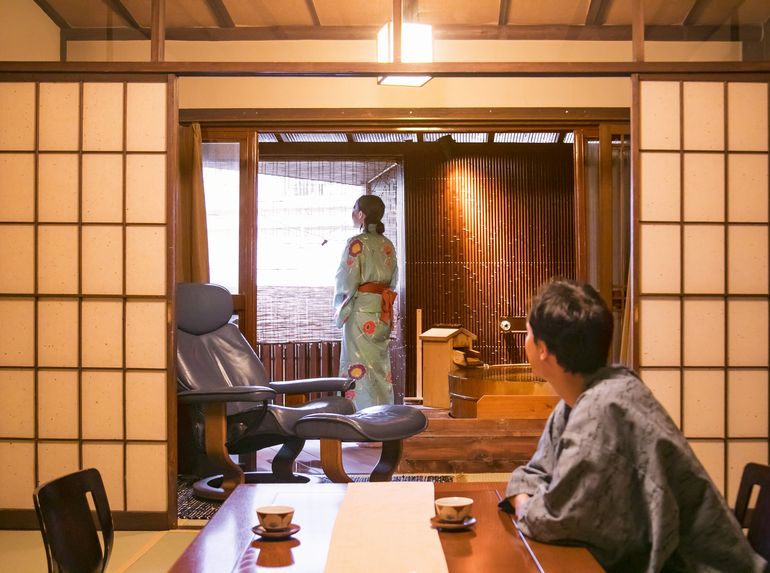
What’s Missing in Your Daily Life? The Luxury of Time Together
When “Being Together” No Longer Means “Connecting”
Days fly by in a blur of career demands and daily responsibilities. You leave home in a rush each morning, and evenings are consumed by chores and preparations for the next day. Before you know it, another day has passed without a meaningful glance or a real conversation.
Even when sitting side by side on the sofa, your eyes are often fixed on your smartphone screens. Though the physical distance between you is just inches, the emotional and conversational distance can feel vast.
“When was the last time we just sat down and talked about nothing and everything?”
If you’ve been feeling this way lately, it might be a sign that caught up in the rush of daily life, you are running low on something vital: quality time together.
From Sightseeing Marathons to Reclaiming Your Time
When planning a trip, we often fall into the trap of filling our itinerary with “where to go,” “what to see,” and “what to eat.” We rush from one famous tourist spot to another, snapping photos on a tight schedule. Of course, that can be fun too.
However, is a packed itinerary really what you need right now?
What we propose is a journey where the sole purpose is securing uninterrupted time for the two of you.
Sharing idle conversations in the car as the coastal scenery of Izu drifts by.
A quiet evening stroll hand-in-hand through a traditional hot spring town.
Savoring exquisite local cuisine in a tranquil, intimate space designed exclusively for adults.
A little detour away from the rush of sightseeing, with simply “each other” at the center of the journey.
Why We Want to Help You Reclaim Your Time
At “Futari no Yuyado Yubana Mankai” in Atagawa Onsen, we made the deliberate choice to be an adults-only ryokan with just 16 rooms. We do not have the bustling commotion of large resort hotels. Instead, we offer absolute tranquility and six private hot spring baths (貸切風呂) dedicated entirely to couples.
For couples and partners who are giving their all to everyday life, yet finding that time for each other has slipped to the back burner—we truly wish for you to spend time here with us. That is our deepest hope.
Whether you use the mist-filled privacy of our private hot spring baths to finally talk about deeper matters, or simply share lighthearted laughter just like you did when you first met—knowing that we can provide such precious moments for you is the greatest joy for all of our staff.
“You know, I’ve been thinking about this lately…”
“Remember when we used to…”
It doesn’t have to be anything profound. We want you to rediscover the simple warmth of listening to each other’s voice and sharing the same moment, just as you used to do. If you feel something is missing in your daily routine, please let us help you fill that space.
Will You Reserve Time for Two This Weekend?
“We haven’t had enough time for just the two of us lately.”
If reading these words brought your partner’s face to your mind, perhaps it’s time to step away from schedules and efficiency.
The sound of Atagawa’s ocean waves and the soothing warmth of our natural hot springs are waiting to gently restart the clock for the two of you.
It all begins with reserving time for just the two of you.
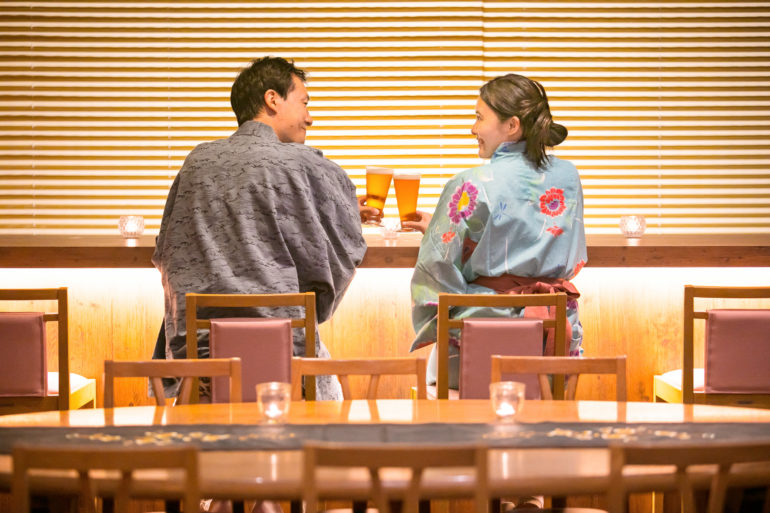
Reserve Your Time Together at Yubana Mankai
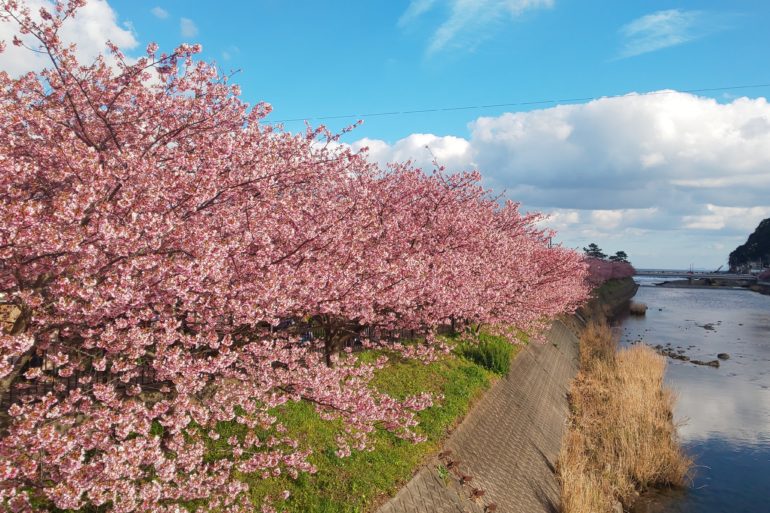
The Japan Expert’s Secret: Choosing Atagawa for Kawazu Cherry Blossom Season
Beyond the Blossoms: A Deeper Dive into Early Spring in Izu
From late February to early March, the Izu Peninsula bursts into vibrant pink with the early blooming Kawazu Cherry Blossoms. The tunnels of cherry trees along the Kawazu River are undeniably breathtaking. However, this spectacular beauty often comes with a price: **overwhelming crowds**. Especially on weekends and during peak bloom, Kawazu Town becomes packed with domestic and international tourists, making traffic jams and long queues at restaurants an unavoidable reality.
“I traveled all this way, only to be exhausted by the crowds…”
For the “Japan Expert” who has experienced such frustrations, we propose a smarter choice: **”deliberately staying in Atagawa.”**
Kawazu’s Vibrancy, Atagawa’s Serenity: A Tale of Two Charms
During the Kawazu Cherry Blossom Festival, Kawazu Town is alive with a festive atmosphere. Stalls line the streets, the aroma of local delicacies fills the air, and people exchange smiles under the cherry trees. This is, in itself, a wonderful experience of Japan’s spring tradition. However, with limited accommodation options in Kawazu, finding a quiet place to enjoy a meal might prove challenging.
In contrast, Atagawa Onsen, just a 10-minute train ride away, maintains a surprising tranquility during the same period. Escaping the hustle and bustle of Kawazu, the peaceful hot spring town offers a serene retreat, truly deserving of the title “adults’ hideaway.” At our inn, “Futari no Yuyado Yubana Mankai,” with only 16 rooms, you can enjoy special moments with your loved one without worrying about other guests.
Three Reasons Why Atagawa is Your Strategic Base
1. Unbeatable Access and Convenience
Atagawa serves as an ideal **”transit point”** for early spring sightseeing in Izu. It offers excellent access to major tourist destinations like Izu Kogen and Shimoda, with smooth train connections. Our inn is within walking distance from Izu-Atagawa Station, and a shuttle service is also available. The ease of travel, even with heavy luggage, is a significant advantage.
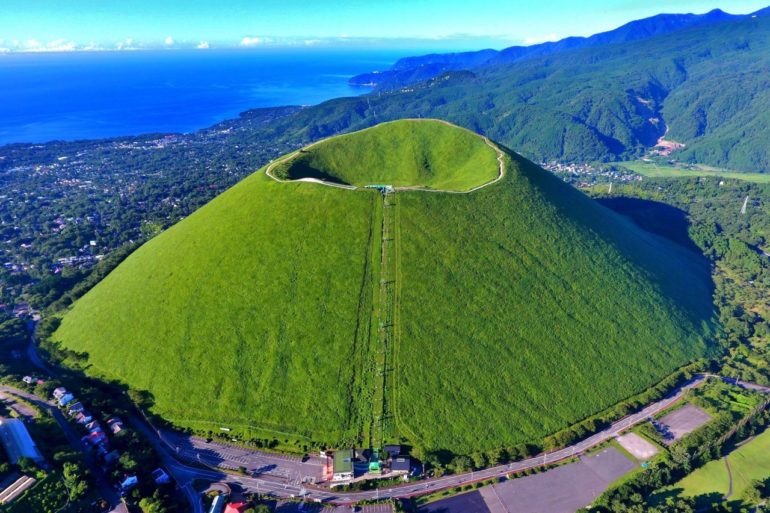
2. An Onsen Town Illuminated by Night
While Kawazu Town features illuminated night cherry blossoms, Atagawa Onsen boasts its own unique evening charm. The steam rising from the onsen yagura (hot spring towers) creates an ethereal atmosphere, and the soft glow of lanterns gently illuminates the cobblestone streets. After enjoying the magnificent Kawazu Cherry Blossoms during the day, you can stroll through Atagawa’s quiet and atmospheric hot spring town at night. This is the true essence of staying at a Japanese ryokan.
3. The Ultimate Private Space at “Futari no Yuyado”
Our inn embraces the concept of “Adults-Only, 16 Rooms.” This is our **”commitment”** to ensuring our guests can truly relax and cherish their time with their loved one. After sharing the breathtaking beauty of the Kawazu Cherry Blossoms, imagine soaking in a free-flowing hot spring in a private space, undisturbed by anyone, and savoring dishes made with fresh local seasonal ingredients. Isn’t this the true luxury that a “Japan Expert” seeks?
Conclusion: Discover Your Own Spring in Izu, from Atagawa
The beauty of Kawazu Cherry Blossoms is universally acknowledged, but to avoid the crowds and experience Izu’s spring more deeply and comfortably, making Atagawa Onsen your base is the “Japan Expert’s Secret.” While a lively festival atmosphere is enjoyable, sometimes a quiet, luxurious journey spent with a loved one is even more special.
This Kawazu Cherry Blossom season, why not discover your own unique spring in Izu from “Futari no Yuyado Yubana Mankai” in Atagawa Onsen?
Book Your Serene Spring Getaway Now
The Heartbeat of the Earth
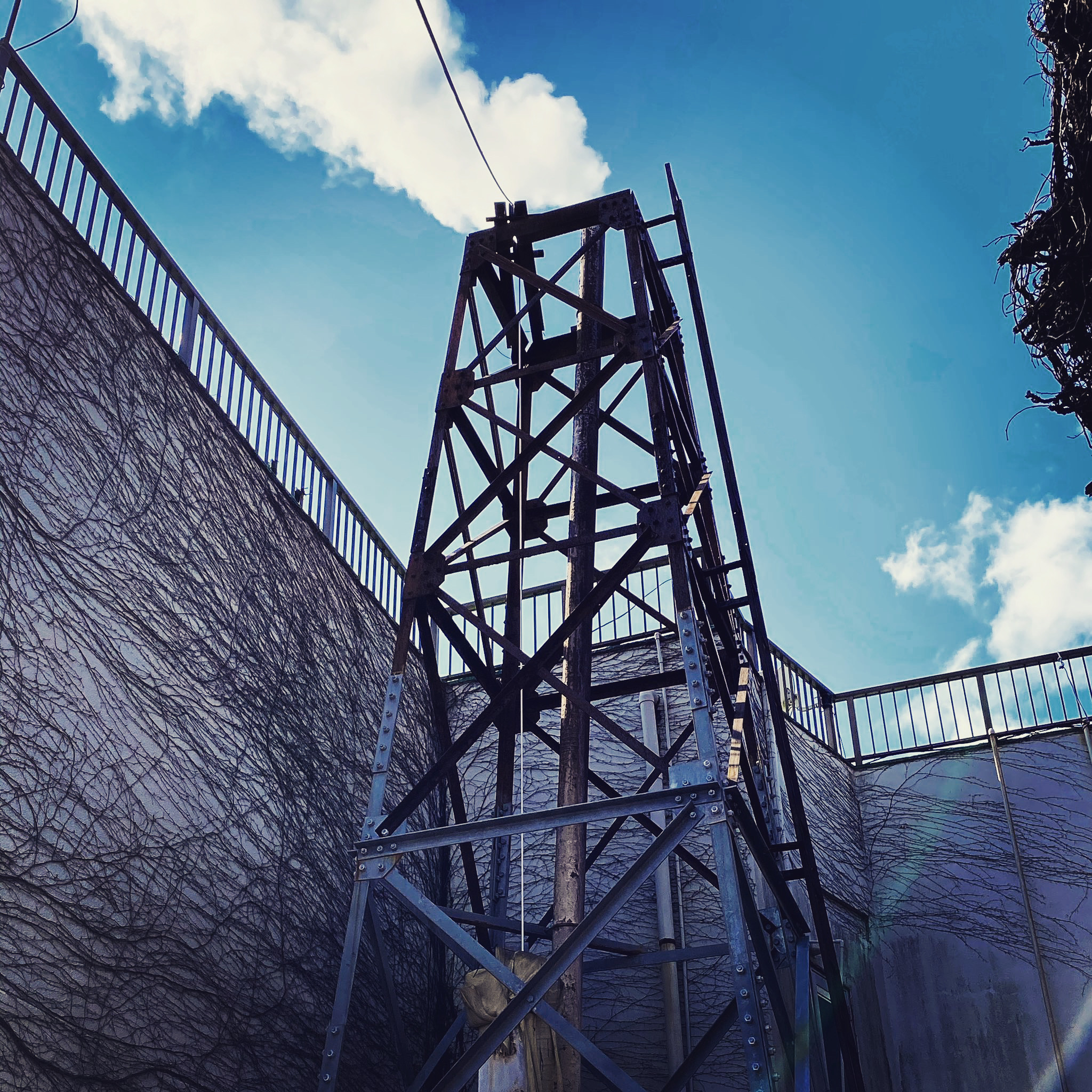
As you step off the train at Izu-Atagawa Station, the first things that greet you are the towering wooden structures known as Yagura (onsen towers) and the plumes of white steam rising toward the sky. This striking landscape is a constant reminder that the hot springs we enjoy are, in fact, the raw “roar of the Earth.”
The Zen of Facing 100°C Springs
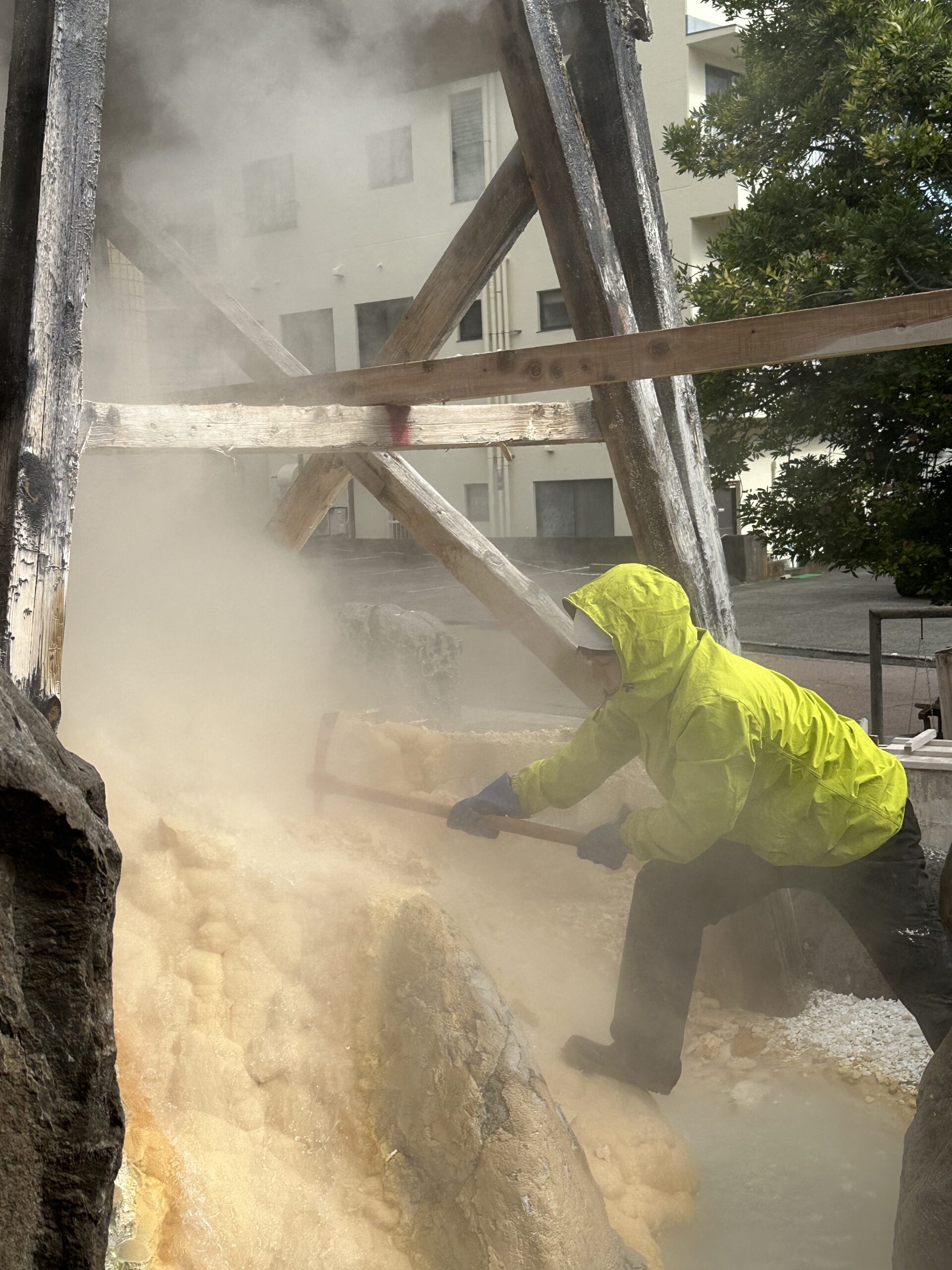
That rhythmic “clank, clank” sound you hear in the morning is the sound of Gensen-soji—the cleaning of the spring source. Over time, mineral deposits called Yunohana (snowy flowers of the hot spring) build up inside the pipes. To keep the water flowing, these deposits must be cleared away manually.
Working with water and steam that reaches nearly 100°C (212°F) is a dangerous task where a single mistake can be life-threatening. When we asked our Yumori (Hot Spring Guardians) what they think about during this intense work, their answer was simple: “Mushin” (Clear Mind).
“We simply focus. If even the slightest unusual sound mixes with the rhythm, it is a sign of danger or a malfunction. We sharpen our five senses to listen to the Earth’s mood, ensuring the safety and abundance of the spring.”
A Gift from the UNESCO Global Geopark
The Izu Peninsula is recognized as a UNESCO Global Geopark—a “gift from the southern volcanoes.” In Atagawa, where columns of hot water erupt high into the air, you can feel a sense of awe toward the natural energy that surges forth without any human intervention. It is not just “hot water”; it is the life force of the Earth, delivered to us across tens of thousands of years.
Beyond Relaxation: Receive the Energy
At Yubana Mankai, we pride ourselves on the “Freshness” of our springs. We pour the high-temperature source directly into the baths without adding extra water to cool it down. This is our commitment as Yumori: to deliver the Earth’s energy to you in its purest, most undiluted form.
We believe that an onsen should be more than just a place to relax; it should be a place to recharge your spirit with the energy of the planet. When you leave our baths, we want you to feel more than just “refreshed”—we want you to feel a surge of new vitality, as if you have touched the very pulse of the Earth.
The Courage to be Different
“Why only two guests?”
In the world of Japanese hospitality, where large hotels compete for mass crowds, we chose a different path. As a small, 16-room ryokan in Izu-Atagawa, we knew we couldn’t—and didn’t want to—be everything to everyone. To survive and thrive, we had to “sharpen” our focus. We decided to become a sanctuary exclusively for those traveling in pairs.
A Difficult Choice, A Firm Commitment
We sometimes receive inquiries from guests who wish to stay with their entire family. Each time we must decline, our hearts are filled with sincere regret. To those families, we are truly sorry.
However, we remain firm in this commitment. We believe that by focusing exclusively on “two,” we can protect a level of silence and intimacy that is impossible to find elsewhere. We want to dedicate our full energy to those who resonate with this philosophy—those who seek a rare escape from the noise of the world.
Your Time Together, Your Way
At Yubana Mankai, there is no right or wrong way to spend your time. If you are usually too busy to even share a meal, you don’t need to force a conversation. Simply being in the same space, watching the steam rise from the towers, and listening to the rhythm of the waves is enough. This shared silence is a beautiful beginning.
If there is something you have long wanted to say, or a special anniversary you wish to celebrate, let this be your stage. Our role is to provide the “calm”—an invisible luxury where you can truly face each other without distraction. With only 16 rooms, our staff is dedicated to tailoring every moment to your unique journey.
A Scene Etched into the Heart
As you wander through the streets of Atagawa, you will feel the gentle mist of the hot springs and the salt in the air.
“It may not be a world-famous grand vista. But it is a scene that will be etched deeply into your heart.”
The town itself is a stage for your retreat. The quiet atmosphere here naturally deepens conversations and slows down the ticking of the clock.
Beyond “Refreshing”
When our guests check out, we are happy when they feel refreshed for the week ahead. But we hope for something more. We hope they leave thinking:
“It was good to spend this time just the two of us.”
“I want to travel with you again.”
In the rush of daily life, it is easy to forget the simple joy of being together. If your bond feels just a little closer than it did yesterday, then we have fulfilled our purpose as “Futari no Yujuku”—The Inn for Two.