楽しかったのに、月曜日が来るのが怖い。旅のあとに感じる、あの脱力感について
旅行から帰ってきた翌日、ふと力が抜けてしまうことがあります。
旅のあいだは、確かに楽しかった。おいしいものを食べ、きれいな景色を見て、温泉にも入った。それなのに、家へ戻り、荷物を片づけ、いつもの生活が始まると、なぜか月曜日が来るのが怖くなる。
「楽しかったはずなのに、もう終わってしまった」
そんな気持ちになることは、決して珍しいことではないと思います。
楽しかっただけでは、少し寂しい
私自身、旅行から帰ったときに感じることがあります。
楽しかった。それは間違いない。でも、自分は旅行に行く前と何も変わっていない。そう思ってしまうと、翌日からの日常が少し重く感じられます。
もちろん、旅行に大きな成果を求める必要はありません。旅から人生を変えるような答えを持ち帰らなくてもいい。堅苦しい自己啓発のようなものも必要ありません。
ただ、旅の途中で何かひとつ、小さな気づきがあるだけで、帰った後の気持ちは変わるのではないでしょうか。
旅の中の小さな気づきが、明日を変える
例えば、食事のときに旬の食材を味わい、「ああ、今はこの食材がおいしい季節なんだ」と気づくこと。
それだけでも、帰宅してからの景色が少し変わります。日常の食卓で別の旬のものを探してみたくなる。次に買い物へ行ったとき、いつもより季節を意識してみる。旅の中で感じたことが、日常の中に小さく残ります。
温泉も同じです。
ただ「気持ちよかった」で終わるのではなく、体の中にエネルギーがたまったように感じる。肩の力が抜け、自分の体が思っていた以上に疲れていたことに気づく。その実感があれば、帰った後も自分の体を少し大切にできるかもしれません。
旅行とは、日常から逃げるためだけのものではなく、日常へ戻ったときの自分に、何かを残すための時間でもあるのだと思います。
ふたりの会話には、明日への気づきがある
ふたりで旅行をするなら、旅の中で交わす会話も大切です。
普段は共働きや家事、育児に追われ、同じ場所にいても、それぞれがスマートフォンを見ている。一緒にいるのに、一緒ではない。そんな時間が続くこともあります。
旅先では、移動中の車の中で話す。食事をゆっくり味わいながら話す。温泉から上がった後、普段なら話さないことを話してみる。
重い話をしてもいい。反対に、昔のような他愛のない話でもいい。
パートナーの言葉から、今まで気づかなかったことに気づくことがあります。「そんなふうに考えていたんだ」と知るだけで、帰ってからのふたりの時間が少し変わることもあります。
その気づきがある旅なら、月曜日は単に戻ってくるだけの日ではありません。旅で見つけたものを、明日からどう生かそうかと考えられる日になります。
熱川の温泉から、体にエネルギーを受け取る
ふたりの湯宿 湯花満開で過ごしていただきたいのは、観光名所をすべて訪れるための忙しい旅ではありません。
温泉に入り、体にエネルギーがたまったことを感じること。季節の料理を味わい、食材の旬に気づくこと。温泉街を歩き、湯煙や波の音を感じること。そして、ふたりでゆっくり話すこと。
伊豆熱川には、世界に誇る絶景だけがあるわけではありません。しかし、温泉の熱、海の音、湯煙の立つ街の風景は、帰った後も心に残ります。
それは、「すごいものを見た」という記憶というより、「確かに自分の中に何かが満ちた」という感覚です。
「ここでチャージできる」と思える場所を見つける
旅行から帰るとき、名残惜しくなることがあります。
それは、旅が終わるからだけではありません。自分が少し回復した場所から、また日常へ戻らなければならないからです。
湯花満開では、お客様がここで過ごす時間を、単なる宿泊の一泊二日とは考えていません。
「ここに来れば、またチャージできる」
そう思える場所を、ひとつ見つけていただきたいと思っています。
疲れたときに思い出せる温泉。ふたりで話したことを思い出せる部屋。湯煙や波の音を思い出しながら、もう一度ここへ来ようと思える場所。
熱川が、お客様にとってそんな場所になれば、私たちはうれしく思います。
無理しても大丈夫、と思える明日へ
旅行のあとに感じる脱力感は、旅が足りなかった証拠ではないのかもしれません。
むしろ、旅の中で体と心がようやく力を抜くことができた証拠なのかもしれません。普段どれほど無理をしていたのかに、帰ってから気づくこともあります。
だからこそ、次の旅では「楽しかった」だけで終わらない何かを、ひとつ見つけてみてください。
旬の食材に気づくこと。温泉からエネルギーを受け取ること。パートナーと、明日からにつながる会話をすること。
そして、こう思える場所を見つけてください。
こうやってチャージできる場所を、私たちは見つけた。
だから、明日からも無理して大丈夫。
ふたりの湯宿 湯花満開は、そんな時間を過ごしていただくための宿でありたいと思っています。
大人専用、16室のみの静かな宿で、温泉に入り、旬を味わい、ふたりの時間を取り戻す。帰るときに少し名残惜しくなるくらいでいい。その名残惜しさが、明日からの自分を支える記憶になることもあるからです。
湯花満開で、明日からの自分に残る旅を
We Had Such a Wonderful Trip—So Why Does Monday Feel So Difficult?
Understanding the Quiet Emptiness After a Holiday
The day after returning from a trip, you may suddenly feel your energy disappear.
During the journey, you were genuinely happy. You enjoyed delicious food, admired beautiful scenery, and relaxed in a hot spring. But once you return home, unpack your luggage, and step back into your usual routine, Monday can suddenly feel rather frightening.
“It was such a wonderful trip—and now it is already over.”
That feeling is not unusual at all.
Sometimes, “It Was Fun” Is Not Quite Enough
I sometimes feel this way myself after returning from a trip.
The trip was enjoyable. There is no doubt about that. And yet, I may find myself thinking: “I have not really changed since before I left.” When that happens, everyday life can feel a little heavier from the following day onward.
Of course, a trip does not need to produce a major result. You do not have to bring home an answer that changes your life. Travel does not need to become a form of self-improvement or a serious personal-development exercise.
But perhaps the feeling after returning home can be different when you discover just one small thing during the journey.
A Small Discovery Can Change Tomorrow
For example, you may taste a seasonal ingredient during a meal and realize, “This is the season when this food is at its best.”
That small discovery can subtly change the way you see everyday life after returning home. You may want to look for another seasonal ingredient at your local market. The next time you go grocery shopping, you may notice the changing seasons a little more carefully. Something you experienced during your trip remains quietly within your daily life.
The same can be true of a hot spring.
Rather than simply thinking, “That felt good,” you may feel as though your body has been filled with energy. Your shoulders relax, and you realize that your body was more tired than you had known. Once you notice that feeling, you may begin treating yourself a little more carefully after returning home.
Travel is not only a way to escape from everyday life. It can also be time spent bringing something back to the person you become when you return to it.
Conversations Between Two People Can Offer a New Perspective
When you travel as a couple, the conversations you share along the way can be just as important as the places you visit.
Many couples are busy with work, housework, or raising children. Even when they are physically in the same place, they may each be looking at their own smartphone. They are together, but they do not always feel truly connected.
A journey creates space for conversation: while driving or traveling to your destination, over a meal enjoyed slowly, or after stepping out of a private hot spring bath. It can become a chance to talk about things that everyday life rarely allows time for.
You may want to discuss something serious. Or you may simply want to return to the light, ordinary conversations you once had.
Sometimes, hearing your partner’s words helps you notice something you had never understood before. Simply learning, “So that is how you have been feeling,” can gently change the time you spend together after returning home.
With that kind of discovery, Monday is no longer only the day when ordinary life resumes. It can become the day when you begin thinking about how to carry something you found on your journey into the days ahead.
Receive Energy from the Hot Springs of Atagawa
At Futari no Yuyado Yubana Mankai, we do not want your stay to be a rushed attempt to visit every sightseeing destination.
We hope you will enter the hot spring and feel energy returning to your body. Taste a seasonal meal and notice the character of the ingredients. Walk through the hot spring town, listening to the sound of the waves and watching steam rise from the streets. And, above all, take time to talk with the person beside you.
Atagawa, on the Izu Peninsula, may not offer only the kind of spectacular scenery that belongs on a list of the world’s most famous views. But the warmth of the hot springs, the sound of the sea, and the streets where steam rises into the air can stay with you long after you leave.
The memory may not be simply, “I saw something amazing.” It may be the quieter feeling that “something was truly restored within me.”
Find a Place Where You Can Recharge
When it is time to leave a trip, you may feel reluctant to go home.
That feeling is not only because the journey has ended. It may also be because you have to leave a place where you had finally begun to recover and return to everyday life once again.
At Yubana Mankai, we do not think of your stay as merely one night and two days at a hotel.
We hope you will discover a place where you can think:
“When I come here, I can recharge again.”
A hot spring you remember when you are tired. A room that brings back the conversations you shared as a couple. A place where, when you recall the sound of the waves and the rising steam, you find yourself thinking, “Let’s come here again.”
It would make us truly happy if Atagawa could become that kind of place for you.
Toward a Tomorrow When It Feels All Right to Keep Going
The emptiness you feel after a trip may not be proof that the journey was incomplete.
It may instead be a sign that, during the trip, your body and mind were finally able to let go. Sometimes, it is only after returning home that you realize how hard you had been pushing yourself every day.
That is why, on your next journey, we hope you will look for one small thing that goes beyond simply saying, “We had fun.”
Notice a seasonal ingredient. Receive energy from the hot springs. Share a conversation with your partner that connects to the days ahead.
And find a place that allows you to say:
“We have found a place where we can recharge.”
“So it is all right for us to keep going, even when life asks us to push ourselves.”
Futari no Yuyado Yubana Mankai hopes to be a ryokan where you can spend that kind of time.
As an adults-only ryokan with just 16 rooms, we offer a quiet setting where you can enjoy the hot springs, taste the seasons, and rediscover time together. It is perfectly fine to feel a little reluctant to leave. Sometimes, that sense of longing becomes a memory that supports you when you return to everyday life.
Take a journey that stays with you at Yubana Mankai
Beyond the Ryokan Dinner: How to Enjoy Atagawa Onsen at Night
A night in Atagawa Onsen does not have to end with dinner and a bath at your ryokan.
Of course, soaking in the fresh hot spring water and enjoying a seasonal dinner at Futari no Yuyado Yubana Mankai are important parts of the Atagawa experience. Yet, if you step outside after dinner, even for a short walk, you will discover a different side of the town.
Lanterns glowing through the steam, the sea at the end of a hillside street, local restaurants, small snack bars, and live music: Atagawa has an evening that belongs not only to visitors, but also to the people who live here.
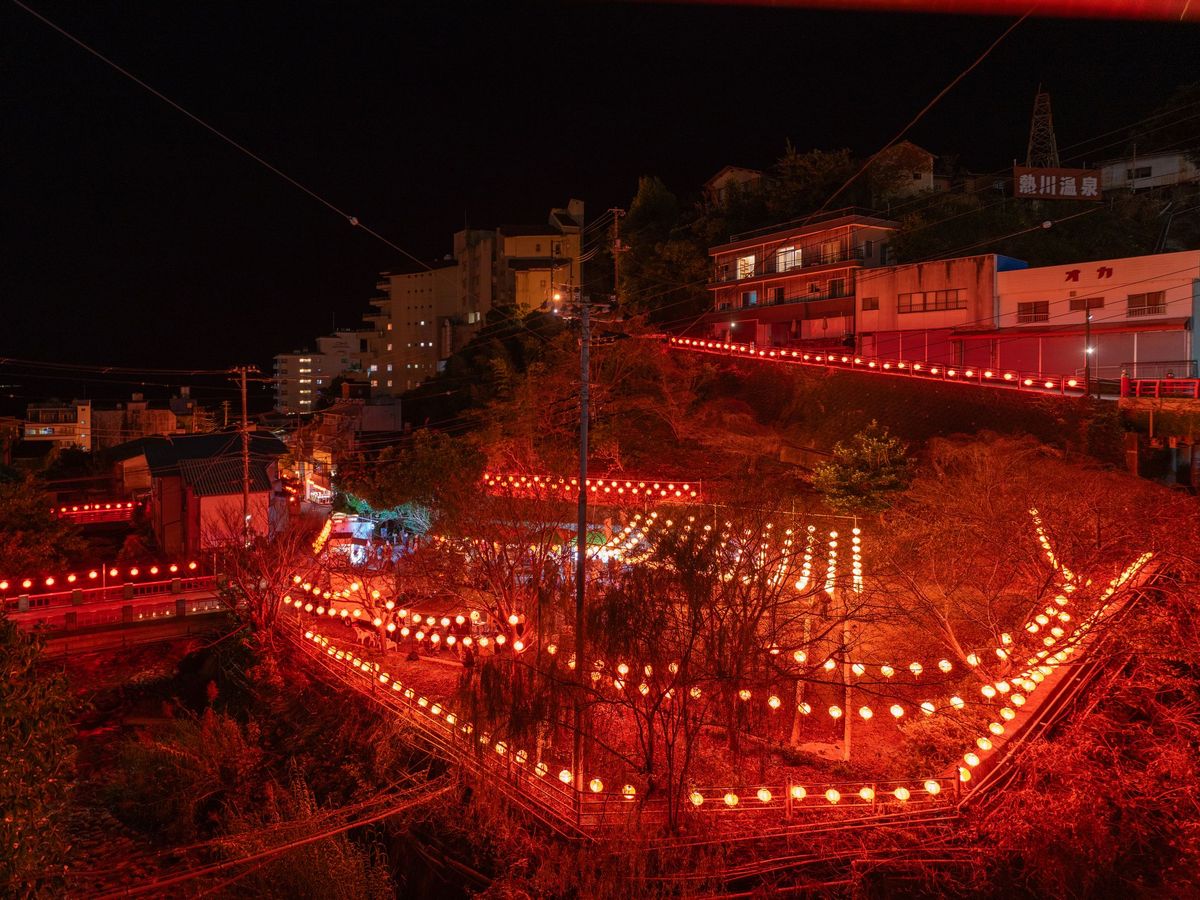
Begin with lanterns, steam, and a hillside walk
Atagawa Onsen is a hot spring town built on hills leading down toward the sea. Steam rises from the hot spring towers, and lanterns illuminate the streets after sunset.
Through its friendship with Jiufen in Taiwan, Atagawa has developed a distinctive lantern-lit nightscape. The combination of warm lantern light, rising steam, sloping streets, and the sound of the Pacific gives the town a nostalgic atmosphere.
Leave Yubana Mankai and walk slowly through the hot spring town. Stop near a hot spring tower, listen for the ocean, and notice the quiet presence of people moving through their own evening. This is not a staged attraction; it is part of Atagawa’s everyday character.
Some streets are steep and dim at night. Wear comfortable shoes, watch your footing, and do not feel that you must walk all the way down to the coast.
Enjoy local food and lanterns at the Atagawa Yuke-muri Night Market
If your stay coincides with an event date, the Atagawa Yuke-muri Night Market is especially worth visiting. The next scheduled dates are September 19–20 and November 21. The venue is Atagawa Hana Hana Park.
Local Izu food and Taiwanese food are served beneath the lanterns and steam of the hot spring town. Please ask the front desk at Yubana Mankai whether the event is being held during your stay. Our staff can also explain how to reach the venue and what the atmosphere is like that evening.
Depending on your dinner plan, you may visit before dinner, or take a gentle walk after finishing your meal at the inn. The choice is yours.
Where to have dinner outside the ryokan
Some travelers want to experience a local restaurant rather than eat at their ryokan every night. In Atagawa, we recommend Nishiki, Oboro, Kimagure, and Osakana OTO.
Nishiki: a popular restaurant and its famous horse mackerel rice bowl
Nishiki is one of Atagawa’s best-known restaurants. It is particularly popular with visitors, so reservations are essential. Its signature dish is an aji-don, a rice bowl topped with local horse mackerel. It is a dish we especially hope international guests will try in Atagawa.
The staff can provide multilingual assistance, making Nishiki a reassuring choice for travelers who may feel uncertain about ordering in Japanese or navigating a local restaurant.
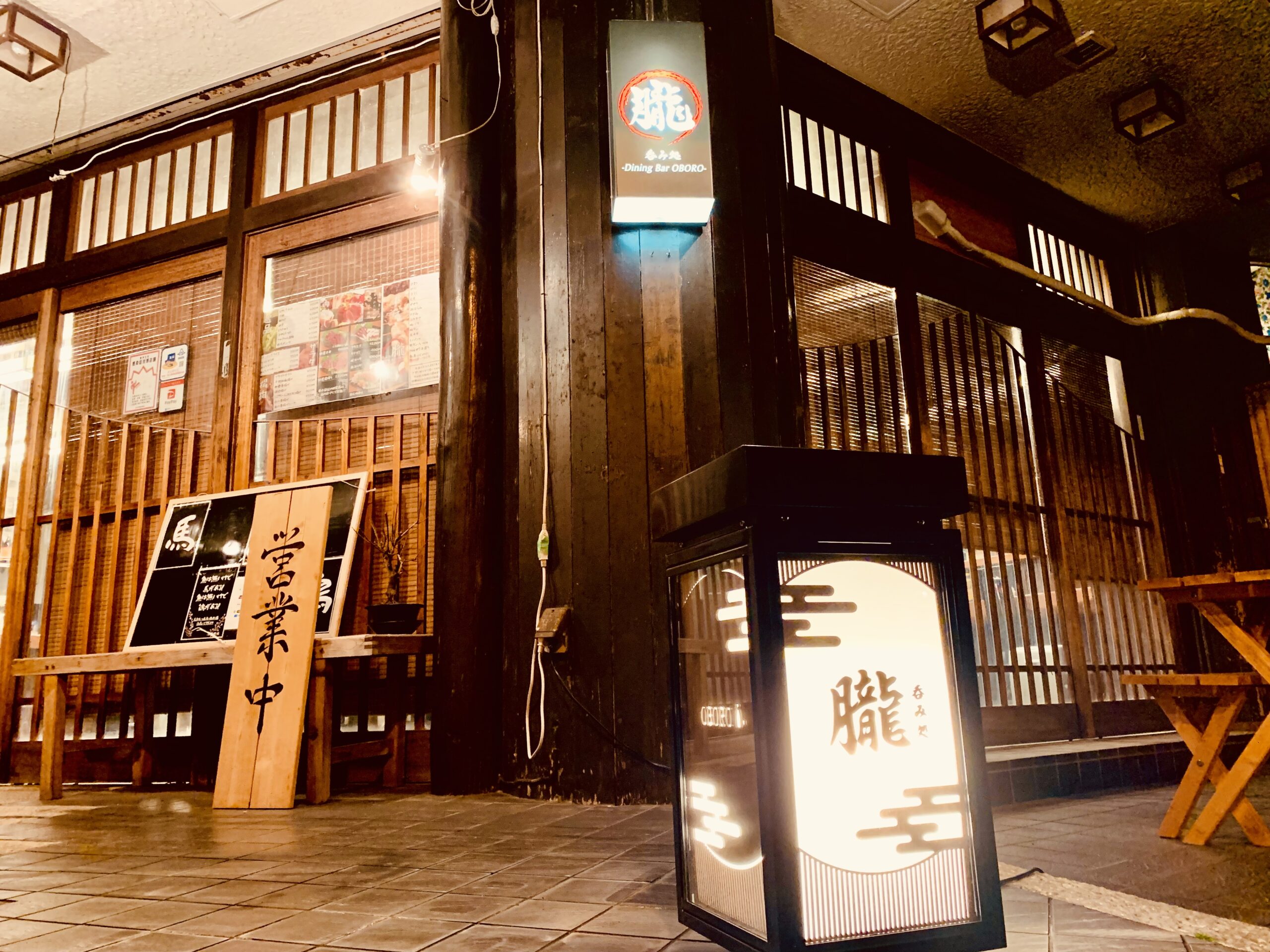
Oboro: an authentic Japanese izakaya in a hot spring town
International travelers often look for an authentic Japanese izakaya. Atagawa has one: Oboro.
From carefully prepared kushiyaki grilled skewers to set meals, the menu offers the kind of satisfying, informal food that makes an izakaya evening special. Enjoy a drink, share several dishes, and experience the atmosphere of a local Japanese night out.
Kimagure and Osakana OTO: share the evening with local people
If you would like to enjoy an evening among both local residents and visitors, consider these two restaurants.
Choose Kimagure when you feel like eating meat, and Osakana OTO when you are in the mood for fish. Rather than looking for a restaurant designed only for tourists, spend an evening where people actually gather, eat, and talk in Atagawa.
For a deeper experience: Atagawa after dinner
For travelers who want to experience a more local side of the town, there are three further options: Snack Tonbo, Bouquet, and beehouse. This is where Atagawa becomes less like a sightseeing destination and more like a place with its own local night culture.
Snack Tonbo: where the night gathers
After drinking in Atagawa, people often gather at Tonbo. Enjoy karaoke and drinks together with local regulars; it is the kind of place where an evening naturally continues.
I have personally found myself, almost without noticing how it happened, singing karaoke with my arm around the shoulders of guests from overseas. Even when every word is not understood, music and drinks can create a shared moment. That spontaneous warmth is part of Atagawa at night.
Bouquet: a new presence in Atagawa
Bouquet is a relatively new establishment, but its creative events and ideas have quickly attracted more and more fans. It is a good choice for travelers who want to discover a newer side of Atagawa’s evening culture.
beehouse: connect through live music
Live performances are held on some days at beehouse. When there is a live event, people who love music gather and the venue becomes lively. If music is part of your ideal evening, check whether a performance is scheduled during your stay.
A relaxed evening itinerary from Yubana Mankai
| Time |
Suggested plan |
| Early evening |
Dine at Yubana Mankai, or visit Nishiki, Oboro, Kimagure, or Osakana OTO |
| After dinner |
Walk through the lantern-lit hot spring town |
| Night market dates |
Visit the Atagawa Yuke-muri Night Market at Hana Hana Park |
| Later evening |
Visit Snack Tonbo, Bouquet, or beehouse |
| Before bed |
Return to Yubana Mankai and enjoy a private hot spring bath |
You do not need to do everything. Choose an outside restaurant on one night, visit only the night market on another, or simply take a short walk before returning to your private bath. Atagawa is best enjoyed at your own pace.
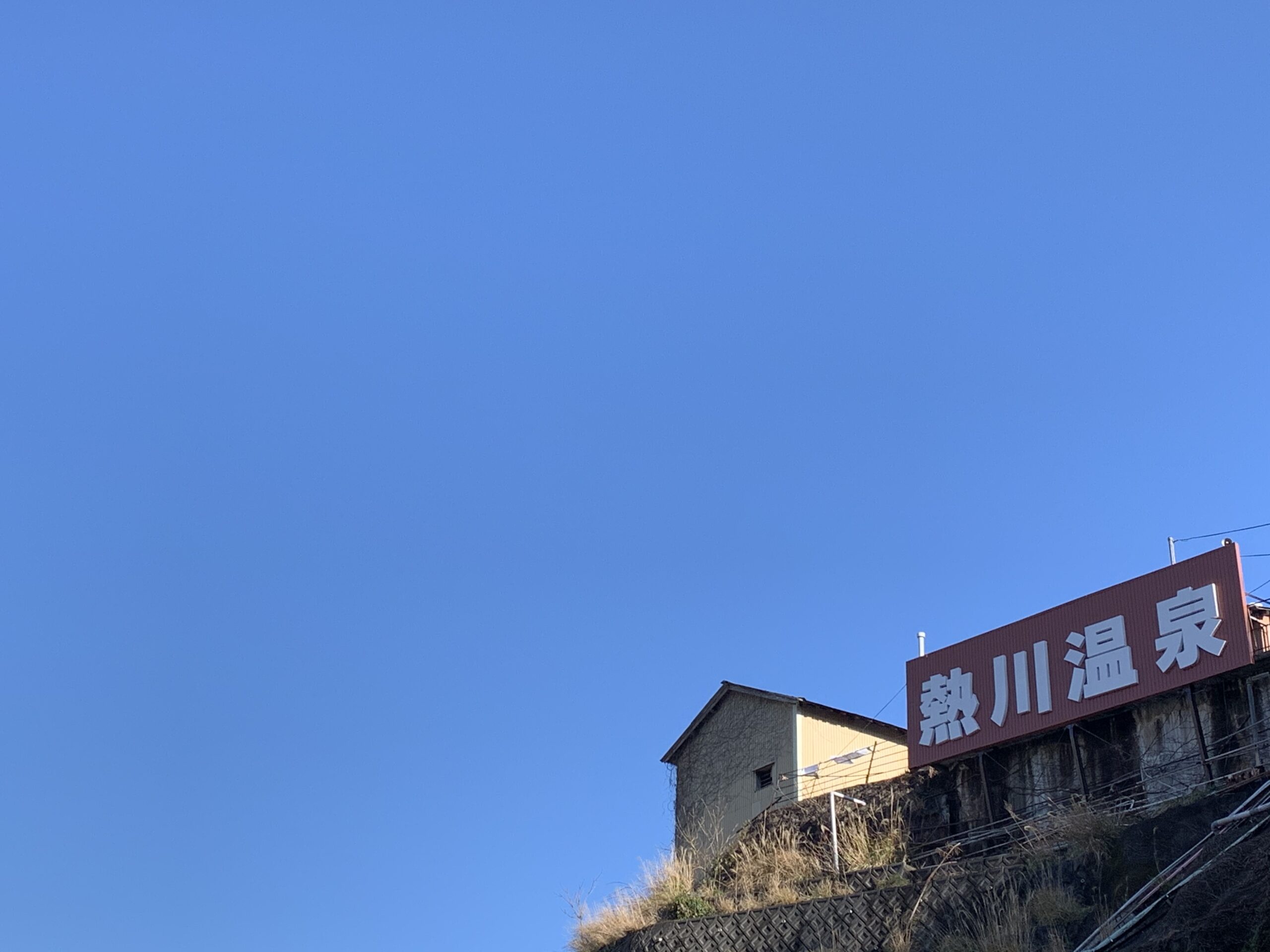
Feel the local time of Atagawa
Atagawa’s night is not about spectacular entertainment.
It is about walking beneath lanterns, watching steam rise from the hot spring towers, tasting aji-don at Nishiki, enjoying kushiyaki and set meals at Oboro, sharing an evening with local people at Kimagure or Osakana OTO, singing karaoke at Snack Tonbo, and discovering new music and new energy at Bouquet or beehouse.
These small experiences create a memory of Izu Atagawa that cannot be gained by simply passing through a sightseeing spot.
Futari no Yuyado Yubana Mankai is an adults-only ryokan with only 16 rooms. We hope you will experience not only the inn, but also the hot spring town around it.
After dinner, step outside for a little while. Beneath the lanterns, talk about what you saw that day or what you hope to do tomorrow. That, too, is an important part of an evening in Atagawa.
Information for international travelers
Restaurants in Atagawa may not stay open as late as restaurants in Tokyo or Osaka. Please ask the front desk at Yubana Mankai on the day of your stay about restaurant opening hours and whether the night market is being held.
At night markets and snack bars, please be considerate of local residents and other guests. Ask before taking photographs of people or interiors, and never drive after drinking.
Atagawa has many slopes, and some areas are dim at night. Wear comfortable shoes and avoid walking in strong winds or bad weather.
Stay at Yubana Mankai and discover the quiet night of Atagawa
WordPress tags: Atagawa Onsen Nightlife, Atagawa Onsen Restaurants, Nishiki Atagawa, Oboro Atagawa, Osakana OTO, Kimagure Atagawa, Atagawa Evening Walk, Atagawa Yuke-muri Night Market, Atagawa Lanterns, Snack Tonbo, Bouquet Atagawa, beehouse Atagawa, Atagawa Onsen Live Music, Izu Nightlife, Japanese Izakaya, Private Onsen Japan, Yubana Mankai
Schedules, opening hours, events, and payment methods may change. Please ask the front desk at Yubana Mankai for the latest information during your stay.
旅館の夜だけではもったいない。外国人旅行者に伝えたい、熱川温泉の夜の楽しみ方
伊豆熱川温泉に泊まる夜は、旅館の夕食と温泉だけで終わる必要はありません。
もちろん、ふたりの湯宿 湯花満開で源泉かけ流しの温泉に入り、季節の料理をゆっくり味わう時間は、熱川旅行の大切な目的です。しかし、食後に少しだけ温泉街へ出てみると、昼間とは違う熱川の表情に出会えます。
湯煙の向こうに灯る提灯、坂道の先に見える海、地元の人が通う食事処、そして小さなスナックの灯り。ここには、観光地として用意された夜だけでなく、人が暮らす温泉街の夜があります。
熱川の夜は、提灯と湯煙から始まる
熱川温泉は、海へ向かって坂道が続く温泉街です。温泉櫓から湯煙が立ち上がり、夕暮れになると温泉街の提灯が夜の道を照らします。
熱川では、台湾・九份との友好交流を背景に、台湾提灯を活用した夜の景観づくりが行われています。提灯の灯りと湯煙が重なる夜の熱川は、昼の観光とは違う、どこか懐かしい雰囲気です。
湯花満開を出発し、提灯の灯りを眺めながら坂道を歩き、湯煙の上がる温泉櫓の近くで立ち止まってみてください。遠くから聞こえる波の音や、夜の温泉街を歩く人の気配も、熱川でしか味わえない夜の一部です。
熱川の道には坂道や暗い場所もあります。夜は歩きやすい靴を選び、無理に海岸まで下りず、足元に余裕を残して散策してください。
熱川ゆけむり夜市で、提灯と地元グルメを楽しむ
旅行日が開催日に重なるなら、「熱川ゆけむり夜市」は特におすすめです。次回開催は9月19日・20日、11月21日。会場は熱川花はなぱぁ~くです。
台湾グルメや地元グルメの出店が並び、提灯と湯煙の中で温泉街の夜を楽しめます。夜市の開催状況や当日の詳細は、ぜひ湯花満開のフロントでご確認ください。開催日にお泊まりのお客様には、会場までの行き方やその日の雰囲気もスタッフがご案内いたします。
夜市の日は、旅館で夕食を済ませた後に散歩として訪れるのか、夕食前に軽く立ち寄るのかを、予約内容と相談して決めるのがよいでしょう。
夕食を外で楽しみたい方へ:熱川の夜ごはん
湯花満開の夕食とは別に、熱川温泉の街へ出て夜ごはんを楽しむ旅もあります。熱川の夜ごはんでおすすめしたいのは、錦、朧、きまぐれ、お魚OTOです。
錦:名物アジ丼を味わう人気店
熱川で知らない人はいない、と言ってもよい人気店です。観光客を中心に多くの人が訪れるため、予約は必須。名物のアジ丼は、伊豆熱川でぜひ味わっていただきたい一品です。
スタッフも多言語対応が可能で、外国人旅行者にとって安心して訪れやすい店です。日本語での注文や店内のルールに不安がある方にも、熱川の夜ごはんの最初の候補としておすすめできます。
朧:熱川にもある、本格的なIZAKAYA
温泉場にも、海外のお客様がイメージする日本のIZAKAYAがあります。それが「朧」です。
店主がこだわった串焼きから定食まで、どれを選んでもハズレなし。お酒を片手に料理を楽しみ、店主や周囲のお客様の気配を感じる。そんな居酒屋らしい夜を、熱川でも過ごしていただけます。
きまぐれ・お魚OTO:地元の人と同じ夜を楽しむ
地元の方や観光客と混じって、熱川の夜を楽しみたい方には、この2店がおすすめです。
お肉の気分ならきまぐれ。魚の気分ならお魚OTO。その日の気分で店を選び、実際に人が食事をし、会話をする温泉街の時間を感じてみてください。
もっとDEEPな熱川を感じたいなら
夕食を終えた後、さらに熱川の夜を深く楽しみたい方には、スナック蜻(とんぼ)、ブーケ、beehouseという選択肢があります。ここから先は、観光地としての熱川ではなく、地元の人が集まる熱川を感じる時間です。
スナック蜻(とんぼ):熱川の夜の最後に集まる場所
熱川で飲んだ後は、みんな蜻に集まります。地元の常連さんと一緒に、カラオケとお酒を楽しむ。そんな、熱川の夜の最後に訪れたい場所です。
私自身も、いつしか気づいたら、海外からのお客様と肩を組んで一緒にカラオケをしていたことがあります。言葉がすべて通じなくても、歌やお酒を通じて、自然に同じ時間を楽しめる。そんな熱川の夜らしい出来事が生まれる場所です。
ブーケ:新しい熱川の夜
最近できた新しい店ですが、企画上手なママのもとでファンが急増しています。熱川の夜に新しい風を感じたい方、店の企画や雰囲気を楽しみたい方におすすめです。
beehouse:音楽でつながる夜
日によってはライブも行われるお店です。ライブの日には、音楽を好きな仲間たちが集まり、店内が盛り上がります。音楽を通じて熱川の夜を楽しみたい方には、ぜひ候補に入れていただきたい場所です。
湯花満開から始める、熱川の夜の過ごし方
| 時間 |
過ごし方 |
| 夕方 |
湯花満開で夕食、または錦・朧・きまぐれ・お魚OTOへ |
| 食後 |
提灯と湯煙を眺めながら熱川温泉街を散歩 |
| 夜市開催日 |
熱川花はなぱぁ~くの「熱川ゆけむり夜市」へ |
| 夜 |
スナック蜻、ブーケ、beehouseなどを訪ねる |
| 就寝前 |
湯花満開へ戻り、貸切風呂で静かに一日の疲れを癒やす |
この予定をすべて実行する必要はありません。外食の日は旅館の夕食を付けないプランを選ぶ、夜市の日は食事量を調整する、散歩だけにして貸切風呂へ戻る。それぞれの旅のスタイルに合わせてお過ごしください。
夜の熱川で、地元の時間を感じる
熱川の夜に、派手なエンターテインメントを期待する必要はありません。
提灯を眺めながら歩くこと。温泉櫓から立ち上がる湯煙を見ること。錦で名物アジ丼を味わい、朧で串焼きや定食を楽しみ、きまぐれやお魚OTOで地元の方と同じ夜を過ごすこと。さらに、スナック蜻でカラオケとお酒を楽しみ、ブーケやbeehouseで熱川の夜の新しい一面に触れること。
こうした小さな体験の積み重ねが、観光地を通り過ぎるだけでは得られない、伊豆熱川の記憶になります。
ふたりの湯宿 湯花満開は、大人専用・16室のみの小さな旅館です。私たちは、旅館の中で過ごす時間だけでなく、熱川の温泉街そのものを感じていただきたいと思っています。
夕食の後、少しだけ外へ出てみませんか。提灯の明かりの下で、今日見た景色や、これからの旅について話す。その時間もまた、熱川で過ごす大切なひとときです。
外国人旅行者の方へ
熱川温泉の店舗は、都市部のように深夜まで営業しているとは限りません。飲食店の営業日・営業時間や、夜市の開催状況については、宿泊当日に湯花満開のフロントでご確認ください。
夜市やスナックでは、周囲のお客様や地域の方への配慮をお願いします。写真撮影は人物や店内の雰囲気を確認してから行い、飲酒後の運転は絶対にしないでください。
熱川温泉街は坂道が多く、夜間は足元が暗い場所もあります。歩きやすい靴を着用し、悪天候や強風の際は無理に散策しないでください。
湯花満開に泊まり、熱川の静かな夜を体験する
WordPressタグ: 熱川温泉 夜, 熱川温泉 夜ごはん, 錦 熱川, 朧 熱川, お魚OTO, きまぐれ 熱川, 熱川温泉 夜散歩, 熱川ゆけむり夜市, 熱川 台湾提灯, スナック蜻, ブーケ 熱川, beehouse 熱川, 熱川温泉 スナック, 熱川温泉 ライブ, 伊豆旅行 夜, 熱川温泉 外国人
※店舗の営業日・営業時間、夜市の開催状況は変更される場合があります。宿泊当日に湯花満開のフロントでご確認ください。
Stay Two Nights in Atagawa: A Southbound 3-Day Izu Itinerary
If you are visiting the Izu Peninsula, changing hotels every night is not the only way to see more. A more comfortable approach is to stay in one hot spring town, leave your luggage in one place, and explore at a relaxed pace.
This two-night itinerary uses Futari no Yuyado Yubana Mankai in Atagawa Onsen as your base. Travel south toward Inatori, Kawazu, and Shimoda, while enjoying the coastal scenery and everyday life visible from the Izu Kyuko Line. Save Izu Kogen and the Jogasaki Coast for your arrival or departure journey.
Rather than trying to see everything, choose your destinations according to the season, weather, and transport conditions.
The itinerary at a glance
| Day |
Route |
Theme |
| Day 1 |
Arrive in Atagawa → hot spring town → Yubana Mankai |
Train views, steam, lanterns, and a ryokan evening |
| Day 2 |
Inatori Morning Market → hanging hina dolls → Kawazu or Shimoda |
Local life, tradition, and geopark landscapes |
| Day 3 |
Slow morning in Atagawa → departure; optional northern stop |
The afterglow of the onsen town and Izu scenery |
Day 1: Meet Izu through the train window
Travelers arriving from Tokyo generally travel via Atami before continuing toward the Izu Kyuko Line. Exact travel times and connections depend on the date and train service, so please check the official JR East and Izukyu information before departure.
The journey on the Izu Kyuko Line is not merely transportation. Look for the blue Pacific Ocean, small fishing ports tucked into coves, houses built on green slopes, fields, and local roads. Alongside the famous scenery, you can see the warmth of places where people actually live.
After arriving at Izu-Atagawa Station, leave your luggage at Yubana Mankai and take a first walk through the hot spring town. A station shuttle may be available between 2:30 p.m. and 5:00 p.m.; please contact the inn when making your reservation to confirm the current arrangements.
Look for steam rising from the onsen towers, lanterns glowing along the streets, and the sound of the Pacific Ocean. In the evening, warm yourself in one of the inn’s private onsen baths and enjoy dinner featuring local ingredients.
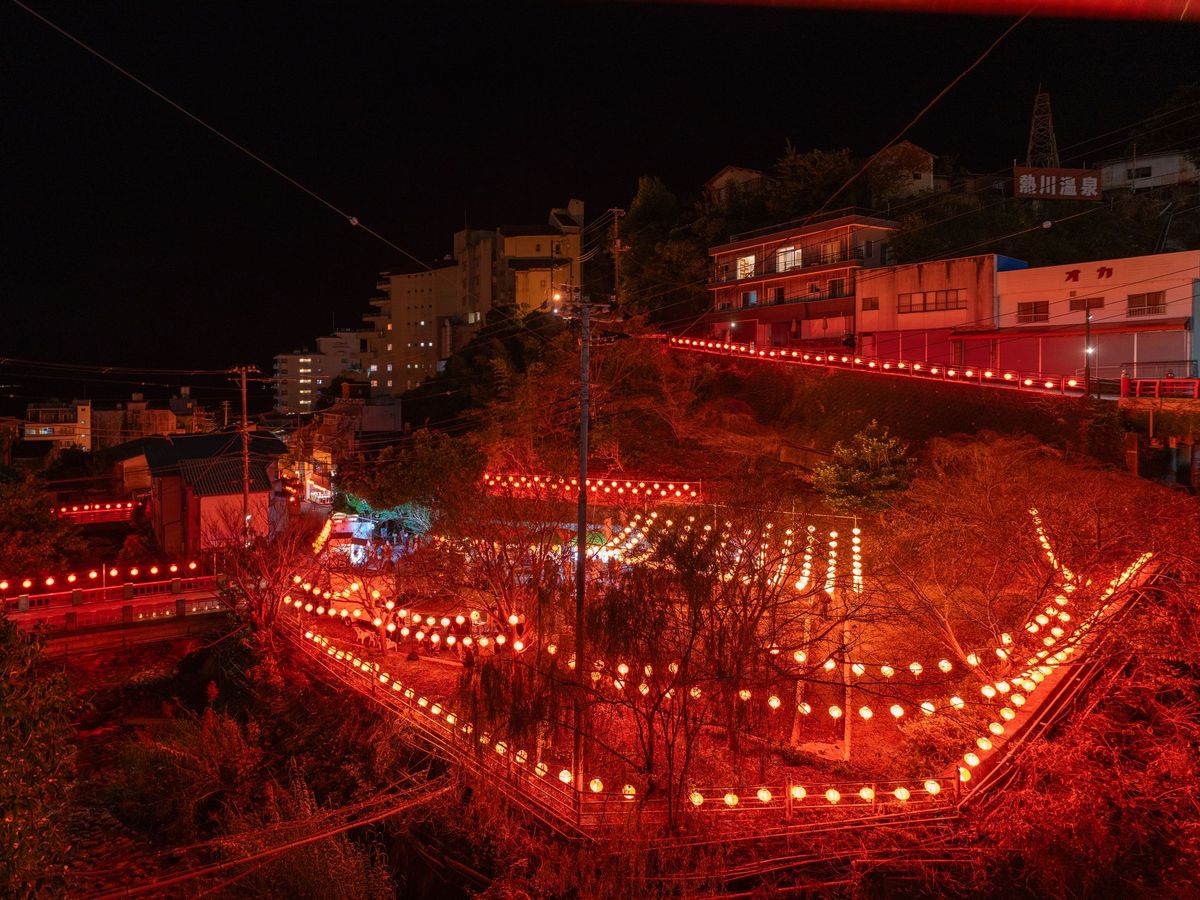
Day 2: From Inatori’s morning market to southern Izu’s landscapes
On Day 2, head south from the morning onward. We do not recommend rushing through Inatori, Kawazu, and Shimoda simply to check them off a list. Choose your destinations according to the season, your interests, and the day’s transport conditions.
Morning: Feel the atmosphere of Izu at Inatori’s Morning Market
If you are comfortable starting early, visit the Inatori Morning Market. The market features agricultural products, seafood, processed foods, and other local products from Higashiizu Town. It is a place to notice the food and human presence of a fishing town.
Official information lists the venue as the first floor of the Higashiizu Town Office multi-story parking lot and the hours as 8:00 a.m. to noon. Opening days and details may change, so please check the latest official information before visiting.
Late morning: Discover the wishes preserved in hanging hina dolls
If you visit Inatori in early spring, make time for its tradition of hanging hina dolls. Inatori is known as the birthplace of this tradition, which has been passed down since the Edo period.
Small handmade ornaments are displayed beside the hina-doll platform, expressing wishes for the healthy growth of girls. The tradition has been passed from mother to daughter and from daughter to grandchild. Each ornament reveals that travel in Izu is not simply about seeing things; it is also about encountering the hopes of local families.
Festival dates, exhibition venues, and admission details vary by year. Please check the official Higashiizu Town or Inatori Onsen information before traveling.
Afternoon: Kawazu Cherry Blossoms or a full day in Shimoda
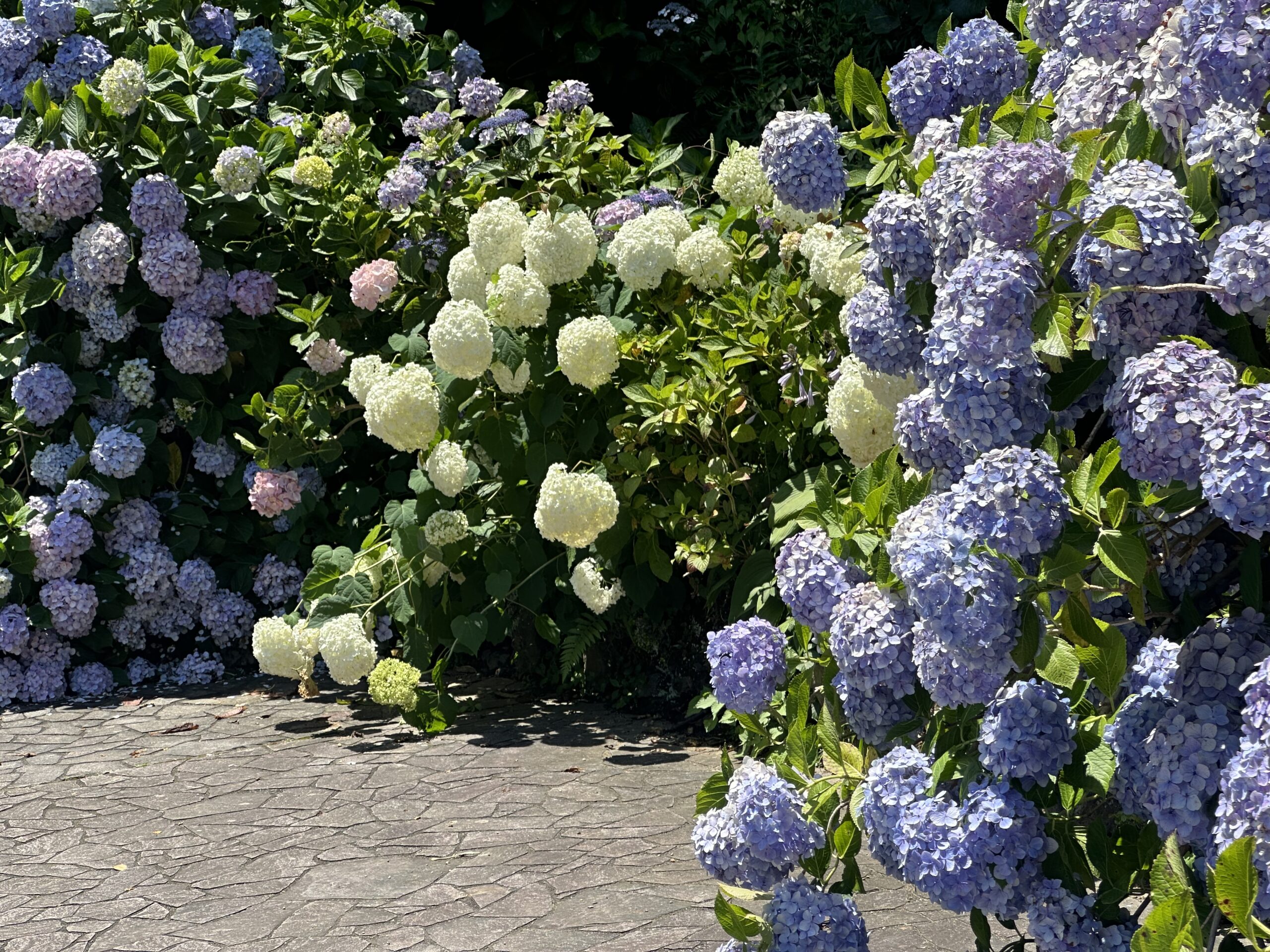
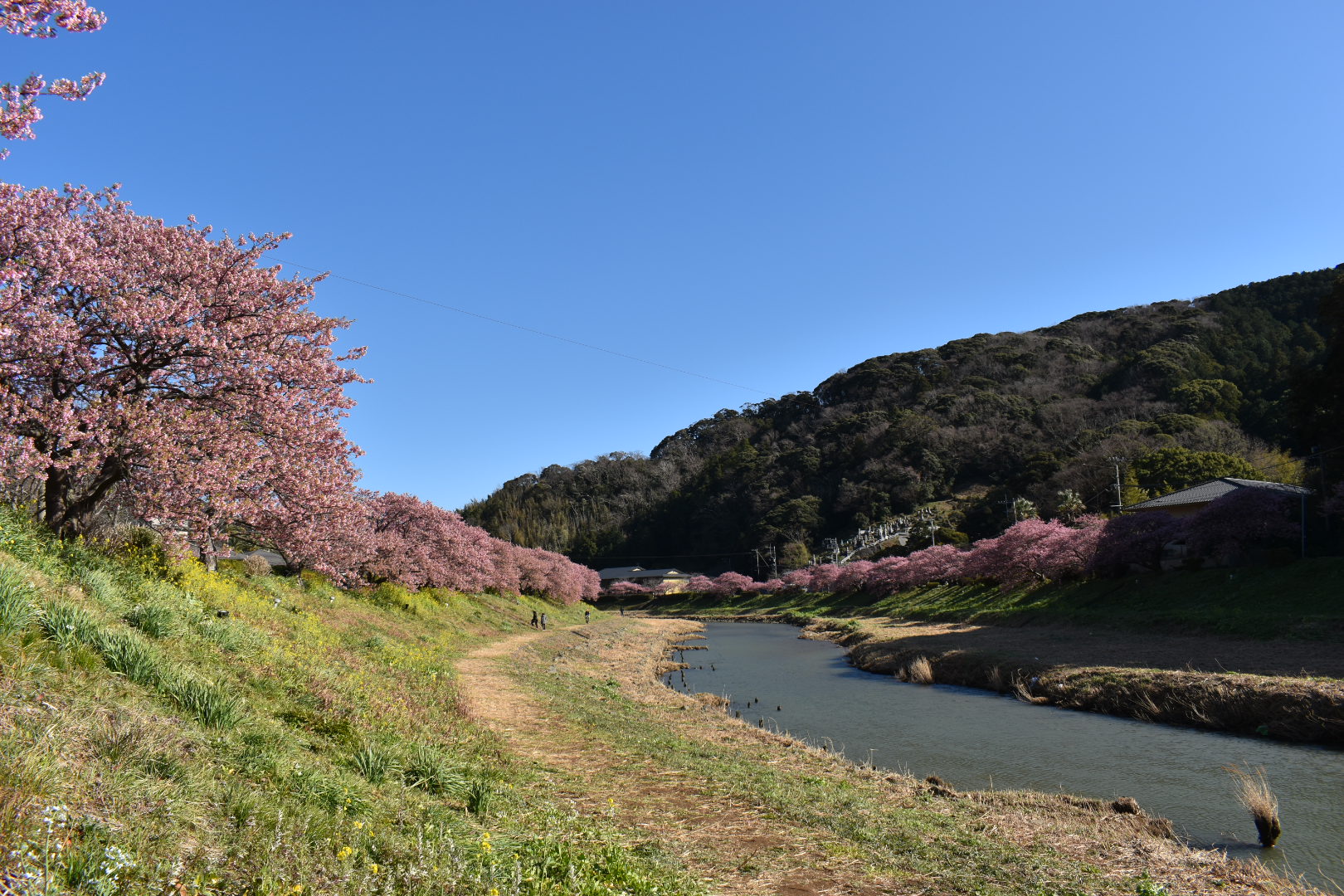
During the Kawazu Cherry Blossom season, walk beside the Kawazu River and enjoy the famous early blossoms. Blooming dates and festival crowd levels vary each year, so check the latest official information before traveling. After Kawazu, return to Yubana Mankai without having to move your luggage into the busiest area.
Outside the cherry blossom season—or if you would like to travel farther south—make Shimoda the main destination for the day. Shimoda is not simply a seaside town. It is a place where volcanic landscapes, clear water, fishing-port culture, and the history of Japan’s opening to the world meet. The town is part of the Izu Peninsula UNESCO Global Geopark, giving the landscape a deeper story beyond its beauty.
For a nature-focused route, choose Ryugu Sea Cave and Cape Tsumeki. Ryugu Sea Cave is a remarkable sea cave whose roof has opened to create a natural skylight. A trail above the cave offers a different perspective, including a place where the landform looks heart-shaped. At Cape Tsumeki, enjoy the meeting of rugged coastal landforms, open ocean, and seasonal vegetation. These are places to experience with your eyes, but also with the sound of wind and waves.
For a history-and-townscape route, walk Perry Road and visit Ryosenji Temple. Perry Road follows the route taken by Commodore Perry’s party on their way to Ryosenji during the negotiations that led to the Shimoda Treaty. Along the Hirana River, the approximately 500-meter stone-paved street is lined with traditional Izu-stone buildings, namako wall patterns, willow trees, stone railings, and old-town details. In the evening, gas lamps give the street a particularly atmospheric character.
Ryosenji Temple stands at the end of this historical story. Nearby, the Shimoda Museum of the Black Ships, MoBS, and Chorakuji Temple offer further ways to understand the period when Shimoda became Japan’s gateway to international exchange. If you prefer to experience the modern life of the port town, visit Kaikoku Shimoda Minato or consider an Izu Cruise, subject to the day’s operating schedule.
If you travel as far as Shimoda, do not try to fit Ryugu Sea Cave, Cape Tsumeki, Perry Road, and every museum into one rushed afternoon. Choose a nature route or a history route, select one or two main places, and leave time to pause. In Izu, the journey itself takes time, and that is part of the experience. At the end of the day, return to Atagawa and enjoy the quiet atmosphere of Yubana Mankai.
Day 3: Enjoy an Atagawa morning, then explore the north on your way out
On your final morning, take a bath before or after breakfast, listen to the ocean, and reflect on the journey.
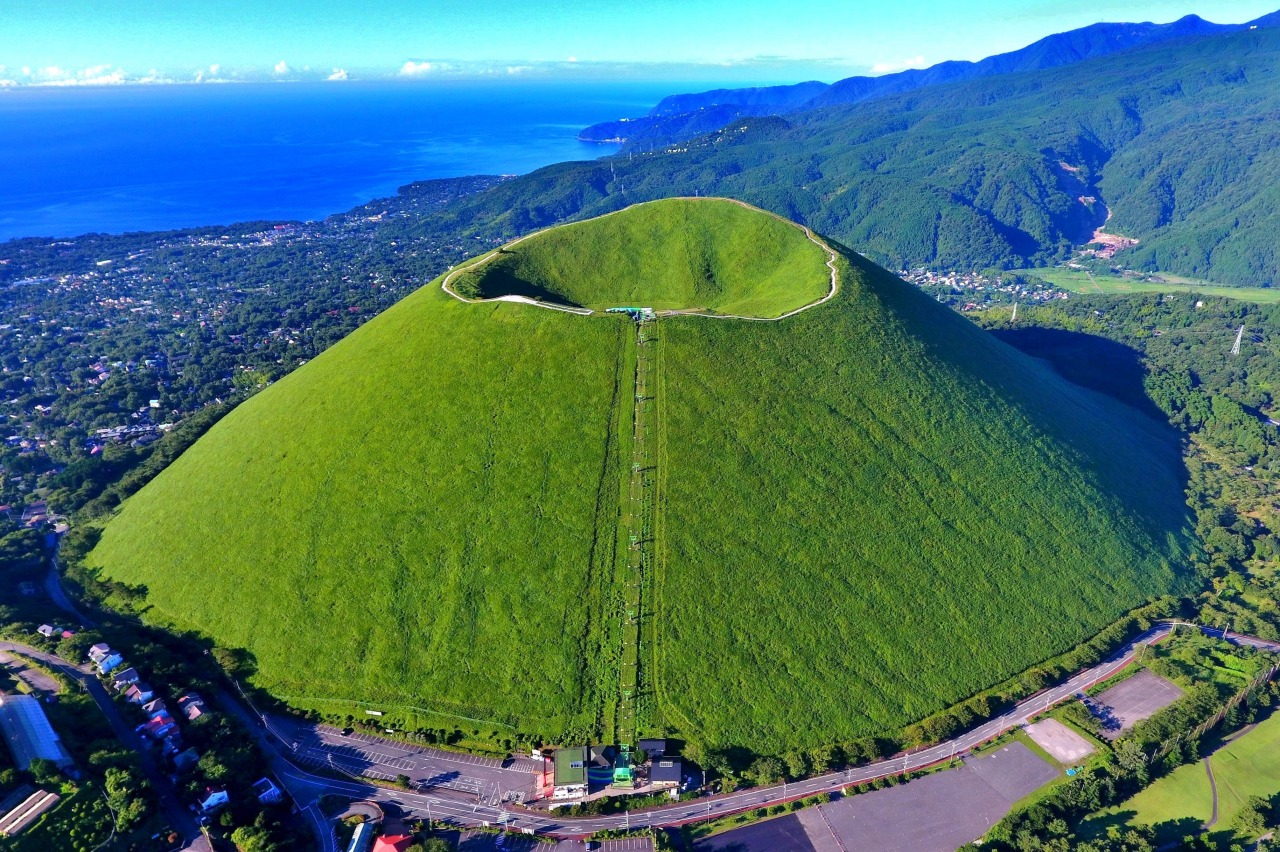
If your departure schedule allows, add Izu Kogen or the Jogasaki Coast as a stop on your way out. You can also visit the northern side of Izu on your way into the peninsula. Placing the northern scenery at the beginning or end creates a pleasant contrast with your southbound day. Always allow plenty of time to reach your train or other connection.
Practical advice for international travelers
Public transportation in Izu is less frequent than in Tokyo or Osaka. Check train and bus timetables, seasonal services, and possible weather-related changes before departure and again on the day of travel. JR East, Izukyu, and each attraction’s official website are the best places to confirm current information.
Markets, restaurants, and seasonal events may have limited opening days or hours. If the Inatori Morning Market, the hanging hina-doll exhibitions, or the Kawazu Cherry Blossoms are important to your trip, check the latest information before traveling.
At a Japanese ryokan, you may be asked to remove your shoes indoors, and meal or bathing times may be arranged in advance. If anything is unfamiliar, please feel free to ask the inn when booking or at check-in.
Do not rush through Izu—travel south from an Atagawa base
The Izu Peninsula is more than a collection of viewpoints. It is the ocean and human life seen from the Izu Kyuko Line, the local produce and seafood at Inatori’s morning market, the family wishes represented by hanging hina dolls, the geological story revealed by Shimoda’s landscapes, and the steam and hot springs waiting in Atagawa at the end of the day.
Futari no Yuyado Yubana Mankai is an adults-only ryokan with only 16 rooms. With six private onsen baths and a quiet atmosphere, the inn is part of the Izu experience itself—not merely a place between sightseeing stops.
Make the second day your southbound day, and enjoy northern Izu when you arrive or depart. By using Yubana Mankai as your base, you can keep your suitcase in one place and experience Izu at your own pace.
Visit the English Website and Book Your Stay
References
Beyond Hakone: A Vast Ocean-View Sea of Gold
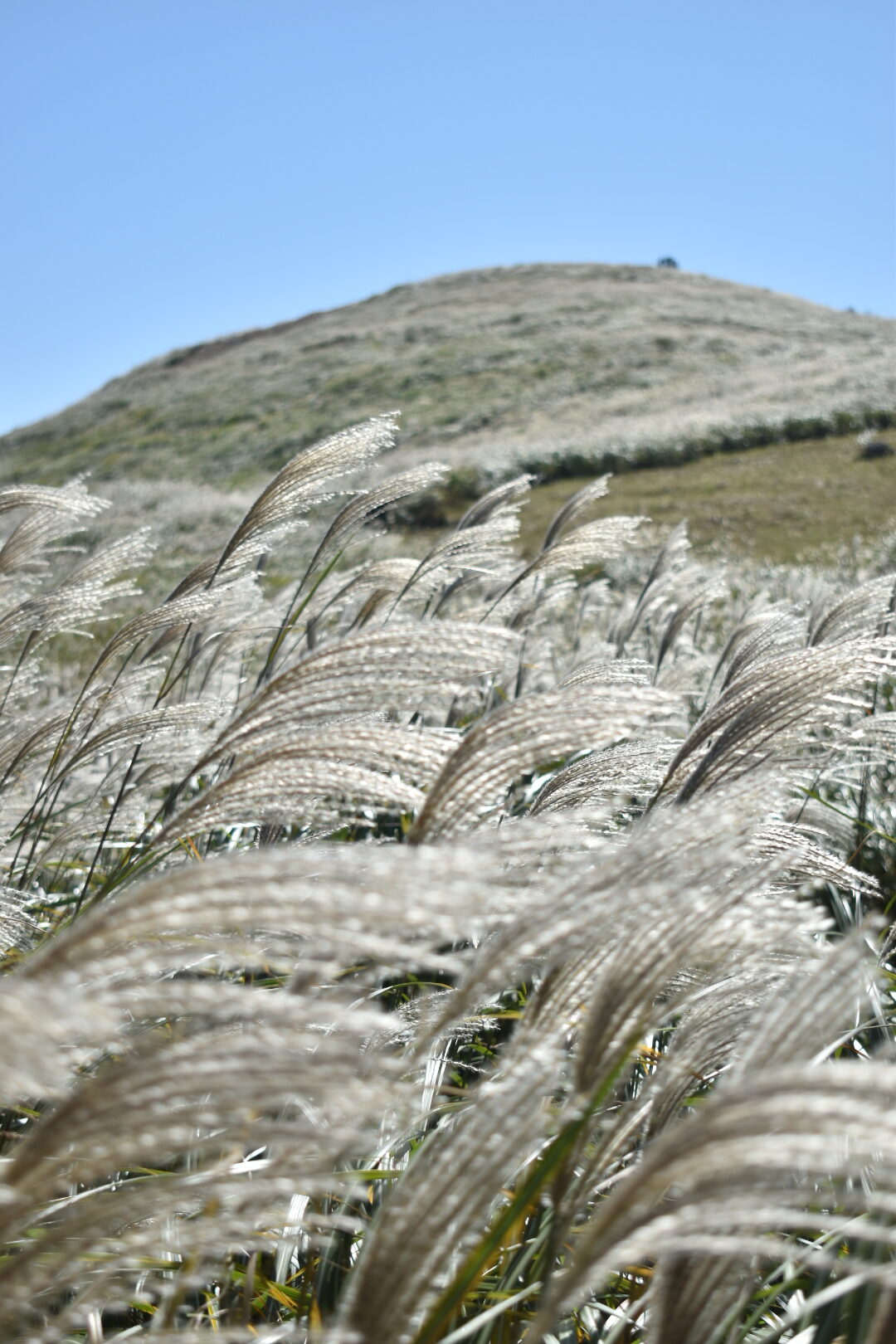
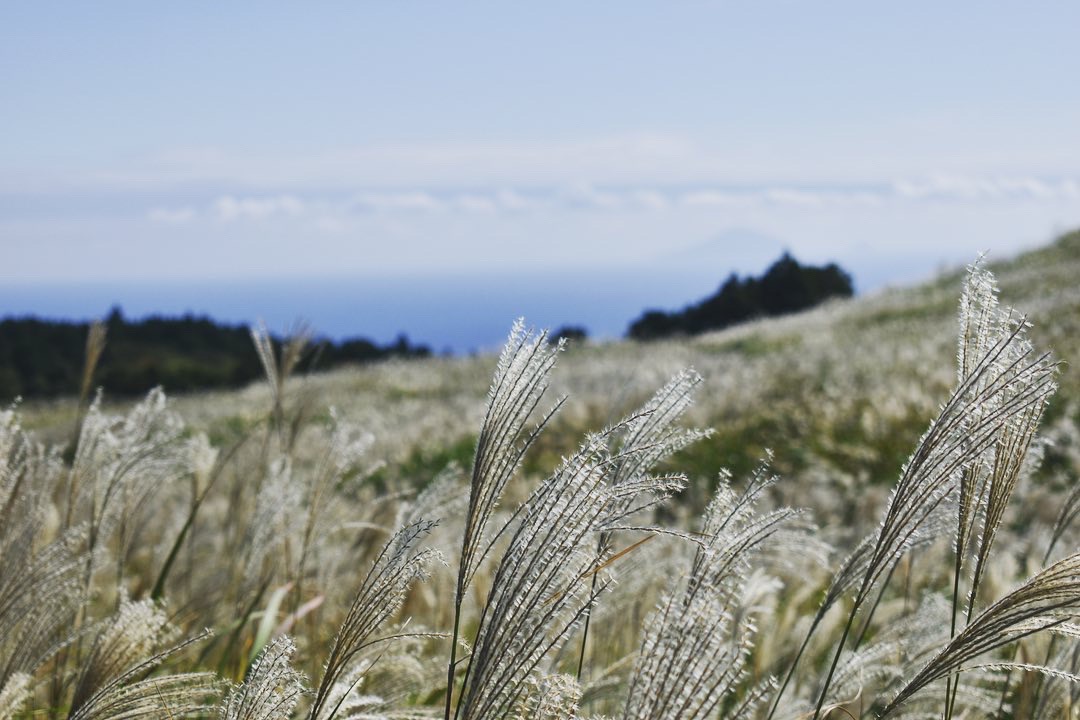
When autumn arrives in Japan, many travelers immediately think of the famous pampas grass fields in Hakone’s Sengokuhara. However, located right here in East Izu, the Hosono Highlands (Hosono Kogen) offers a breathtaking landscape that dwarfs Hakone in both scale and beauty.
Imagine standing amidst a sweeping, boundless grassland where a crisp autumn breeze brushes past your face. As you open your eyes, your entire field of vision is filled with rolling waves of golden pampas grass, set against the sparkling blue backdrop of the Pacific Ocean. There is simply no other place where you can experience such an open, dynamic coastal highlands panorama.
Climbing to Mt. Misugi: The Reward of the Summit
To truly experience the magic of Hosono Highlands, we recommend hiking all the way up near the summit of Mt. Misugi.
While it requires a pleasant walk, the “satisfying fatigue” of climbing under your own power makes the ensuing view infinitely more rewarding. Looking down from the peak, the sweeping expanse of Sagami Bay paired with the shimmering silver-gold grass creates a deeply moving masterpiece of nature that washes away the stress of daily life.
Tip for travelers: Autumn in the highlands can be brisk. For a comfortable hike, we recommend wearing long sleeves, long trousers, and sturdy walking shoes.
Enjoying All of East Izu: Morning Highlands, Evening Atagawa
This magnificent autumn event is not just an attraction of Inatori; it is a collaborative celebration embraced by the entire East Izu region.
To truly savor East Izu, limiting your trip to just one town would be missing out. After enjoying the crisp, invigorating morning air among the highlands, we invite you to journey down to Atagawa Onsen for the evening.
Recharging Your Energy in Atagawa’s Powerful Onsen
After a day of active hiking and breathing in the crisp mountain air, your body will be ready to unwind. What awaits you at our inn, “Futari no Yuyado Yubana Mankai,” is the restorative power of Atagawa’s 100°C natural, free-flowing hot springs.
The pure, high-temperature waters we protect as Yumori (Hot Spring Guardians) wash away not only the physical fatigue of the hike but also the accumulated stress of everyday life. More than just relaxation, the potent energy of our springs revitalizes your core, filling you with fresh vitality for the days ahead.
Embrace the panoramic grandeur of nature by day, and surrender to the quiet intimacy of lantern-lit hot spring baths by night. Why not treat yourself to the ultimate East Izu autumn journey this season?
Book Your Autumn Onsen Getaway
ススキの海原と、青い太平洋のコントラスト
「秋の絶景といえばススキ」と思い浮かべる時、多くの方は箱根の仙石原を想像されるかもしれません。しかし、東伊豆に広がる「稲取細野高原」は、その想像を遥かに超えるスケールで私たちを圧倒します。
どこまでも続くかのような圧倒的な広さの草原を渡る、心地よい秋の風。その風を全身で感じながらゆっくりと目を開けると、視界のすべてを埋め尽くす黄金色のススキと、その向こうにきらめく青い太平洋が飛び込んできます。これほどまでに開放的で、ダイナミックな海の見えるススキ原は他にはありません。
三筋山頂上へ――歩いた者だけが出会える絶景
細野高原の魅力を存分に味わうなら、ぜひ三筋山の頂上付近まで足を延ばしていただくことをおすすめします。
少し長い道のりを歩くことになりますが、自分の足で一歩一歩登るからこそ味わえる「適度な疲れ」が、そのあとに訪れる絶景を何倍にも美しく見せてくれます。頂上から見下ろす相模灘の眺望と、風に揺れるススキの波は、日々の忙しさを忘れさせるほどの感動を与えてくれます。
※なお、秋の高原は肌寒く感じることもあります。また豊かな自然の中ですので、散策の際は長袖・長ズボン、そして履きなれた動きやすい靴でお越しいただくのがおすすめです。
東伊豆町全体を味わう:午前は高原、夜は熱川へ
この細野高原のイベントは、実は稲取地区だけのものではありません。東伊豆町全体が一丸となって皆様をお迎えする、秋の一大イベントです。
東伊豆の魅力を満喫するなら、日中の高原だけを楽しむのは少しもったいありません。すがすがしい朝の光の中で高原を歩いたあとは、ぜひ私たち熱川温泉にも足を延ばしてみてください。
高原の心地よい疲れを、熱川の「熱い温泉」でエネルギーに
三筋山までのハイキングで心地よく汗をかいた身体を待っているのは、熱川温泉の誇る高温の源泉かけ流しです。
当館「ふたりの湯宿 湯花満開」が守り続ける熱々の温泉は、高原でかいた汗と一緒に、日々の生活で溜まった疲れまでもすっきりと洗い流してくれます。それだけではありません。熱川ならではの力強い温泉のエネルギーが、心地よい疲れに包まれた身体の芯まで満たし、明日への活力をチャージしてくれます。
お昼は大自然のパノラマに感動し、夜は提灯の灯る静かな温泉街と貸切風呂で心身を緩める。そんな東伊豆の魅力をすべて網羅する贅沢な秋旅を、今年の休日に選んでみませんか?
Where Festive Energy Meets Serene Luxury
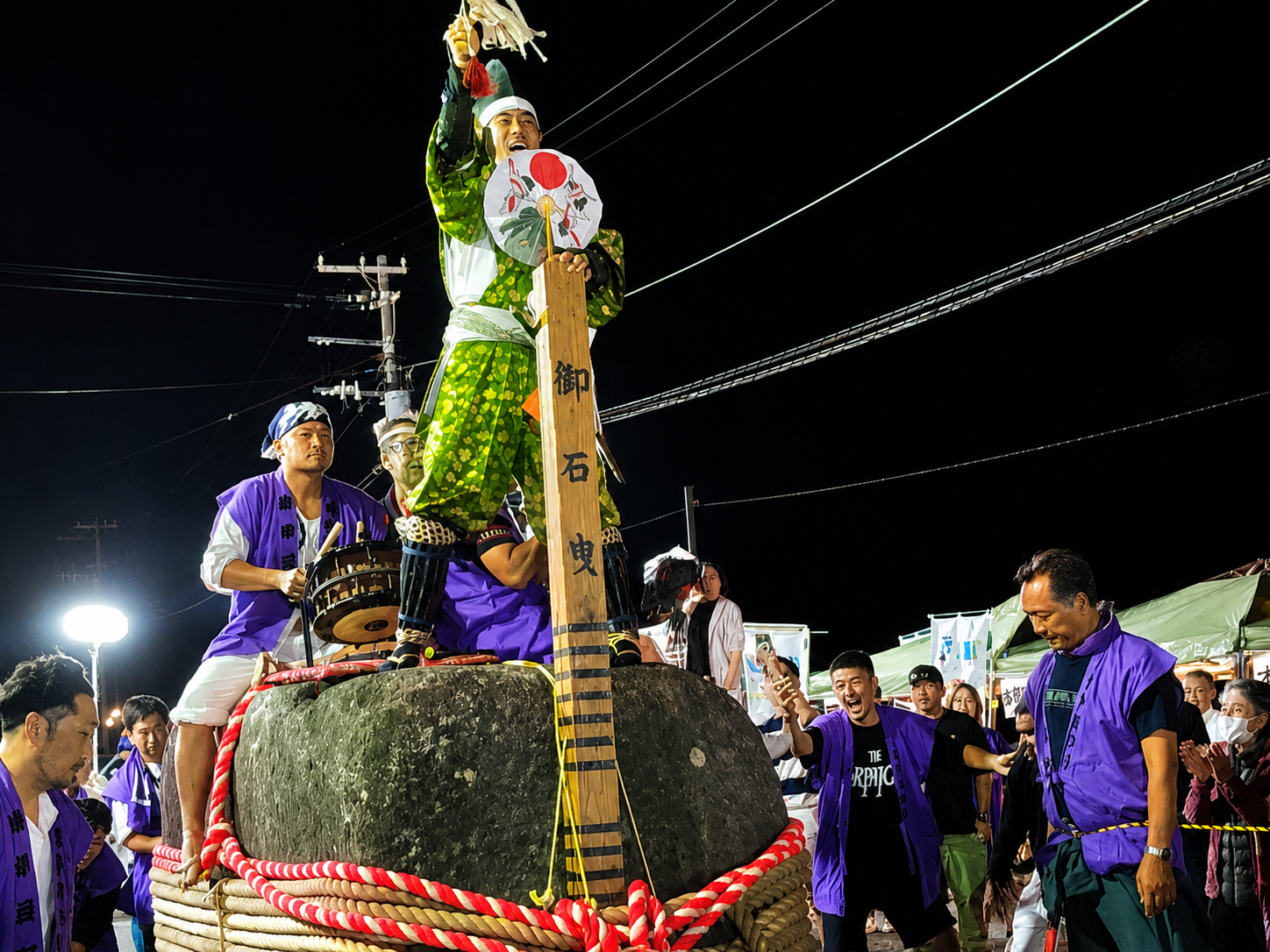
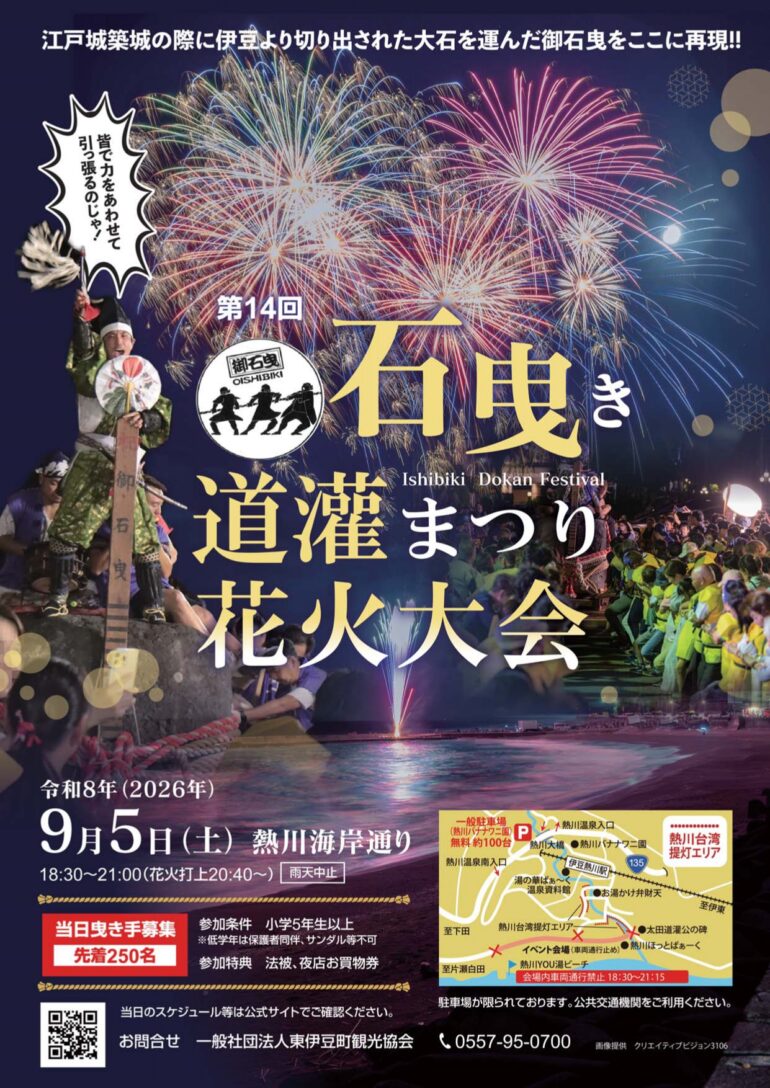
Every year, Atagawa Onsen bursts into a powerful wave of excitement and historic tradition during the Ishibiki Dokan Festival—the town’s most anticipated celebration, honoring the legendary samurai and castle builder Ota Dokan.
The festival’s centerpiece is the hauling of massive, multi-ton stone pillars using thick ropes, where both locals and visitors pull together in unison. Conveniently, our inn, “Futari no Yuyado Yubana Mankai,” is located just a short walk from the heart of the action.
“I want to experience the festival excitement, but I also want peaceful, private time with my partner.”
If that is what you are looking for, Atagawa—and our intimate inn—offers the ultimate combination.
“When Everyone’s Hearts Beat as One, the Stone Moves” — A Former Samurai General’s Insider Tips
Not many know this, but I (the owner of Yubana Mankai) once had the honor of serving as a Samurai General (Samurai-Taisho) leading this very festival. Standing before the gathered crowd, inspiring everyone to give their all, and feeling that surge of collective energy is an experience I will never forget.
As a former Samurai General and a proud local, here is my top advice for experiencing the festival to its fullest:
1. Don’t just watch—join as a puller!
To truly feel the festival, you have to grab the rope. With the traditional cry of “Sore, dokkoi!”, tourists and locals become one team. The moment everyone’s timing and spirit align, the heavy stone suddenly glides forward as if by magic. That overwhelming sense of unity and shared triumph will give you goosebumps. It is so addictive that many travelers return year after year just to feel it again.
2. Savor the local street food and the grand finale of fireworks
Beyond the stone pulling, the streets come alive with local food stalls offering authentic regional delicacies. It is a wonderful chance to interact with the warm-hearted people of East Izu. And as night falls, the festival culminates in a breathtaking display of fireworks lighting up the night sky directly overhead. Experiencing that brilliant display in the crisp evening air, wrapped in the pleasant, satisfying fatigue of a day well spent, is pure magic.
From Festival Thrills to Private Sanctuary
After a day of cheering, laughing, and pulling alongside the community, you return to Yubana Mankai.
The moment you step through our doors, the vibrant energy of the festival gives way to profound, soothing silence. With only 16 rooms dedicated exclusively to adults, our inn offers six private hot spring baths where you can unwind together in absolute privacy.
Soaking in 100% natural, free-flowing hot spring water while sharing stories of the day’s excitement—this is the ultimate “festival journey” designed by those who know Atagawa best.
This season, come experience the perfect harmony of thrilling tradition and serene luxury at Yubana Mankai.
Book Your Autumn Festival Getaway
祭りの熱気と、大人の静寂が共存する場所
伊豆・熱川温泉が一年で最も熱く、そして力強いエネルギーに包まれる季節がやってきます。江戸城を築いた太田道灌の歴史を背景に持つ、熱川最大のイベント「石曳道灌まつり」。
重さ12tもある巨大な御石(おいし)を、観光客も地元住民も一体となって綱で曳くこのお祭り。実は、当館「ふたりの湯宿 湯花満開」はこのお祭りのメインエリアから歩いてすぐの場所にあります。
「お祭りを楽しみたいけれど、夜は静かに二人でゆっくり過ごしたい」
そんな大人のワガママを完璧に叶えてくれるのが、熱川という場所であり、当館なのです。
「みんなの気持ちが一つになると、石が動く」――元・侍大将が語る見どころ
実は、何を隠そう私(当館オーナー)は、かつてこのお祭りで「侍大将」を務めさせていただいた経験があります。大勢の皆さんの前で采配を振るい、みんなを鼓舞するあの高揚感は、今でも忘れられません。
侍大将として、そしてこの街に生きる者として、皆様にどうしてもお伝えしたい楽しみ方があります。
それは、「ただ見物するのではなく、ぜひ曳き手として参加してほしい」ということです。
侍大将の「皆の者、曳け~~!」という魂の合言葉とともに、その場にいる全員の気持ちが一つになった瞬間――びくともしなかった12tの御石が、「ズズっ、ズズズ~」とまるで生き物のように動き出します。あの圧倒的な一体感と、全員で成し遂げたときの鳥肌が立つような感動は、言葉では言い表せません。あの感覚は一度味わうと癖になり、毎年リピーターとして駆けつけてくださる方がいるのも納得です。
グルメに、花火に、東伊豆の一体感
石曳きの熱気だけではありません。会場には地元の味覚が詰まった露店やグルメが並び、海外からのお客様や遠方からお越しの方も、地元の温かな雰囲気を存分に味わうことができます。熱川だけでなく、東伊豆町全体が一丸となって作り上げるお祭りだからこそ、スタッフの私たちも毎年自然と気合が入ります。
そして、お祭りのフィナーレを飾るのは、夜空を彩る打ち上げ花火です。
大声を出して、みんなで力を合わせて石を曳いた後の「心地よい疲れ」。その最高にリラックスした状態で、見上げる頭上の夜空に大輪の花火が打ち上がります。これほど贅沢なエンディングがあるでしょうか。
熱狂のすぐそばに、二人のための静寂を
お祭りでめいっぱい笑い、声を出し、感動を分かち合った後――。
一歩、当館「ふたりの湯宿 湯花満開」の扉を開ければ、そこには外の賑わいが嘘のような、しっとりとした静寂が広がっています。
全16室・大人専用の落ち着いた空間で、6つの貸切私湯に身を委ねる。熱い一日の思い出を語り合いながら、源泉かけ流しの温泉で体をほぐす。これこそが、熱川を知り尽くした私たちが提案する、最も贅沢な「祭り旅」の形です。
今年の秋は、ぜひ熱川温泉で「最高の熱狂」と「極上の静寂」を体験してみませんか?
一緒にいるのに、一緒じゃない日々に
共働きで慌ただしく過ぎ去っていく毎日。朝はそれぞれの支度でバタバタと家を出て、夜は家事や育児、翌日の準備に追われる。気づけば、今日一日まともに顔を見て会話すらしていない。
休日にリビングのソファで並んで座っていても、視線の先にあるのはそれぞれのスマートフォンの画面。物理的な距離は手の届くところにあるのに、心や会話の距離はなんだかとても遠い。
「最近、ゆっくり話した記憶がないな…」
もし、そんなふうに感じることがあるなら、それは日々の生活に追われて、大切な「ふたりの時間」が足りなくなっているサインかもしれません。
観光地を「巡る」旅から、ふたりの時間を「取り戻す」旅へ
旅行に行こうとなると、私たちはついつい「どこへ行くか」「何を見るか」「どんな美味しいものを食べるか」というスケジュールを詰め込みがちです。話題の観光地を巡り、写真を撮って、忙しく移動する。もちろん、それも楽しい旅の形です。
けれど、本当に今あなたに必要なのは、予定で埋め尽くされたスケジュールでしょうか?
私たちがご提案したいのは、「ふたりの時間を確保すること」そのものを目的とした旅です。
- 熱川への道中、車窓から流れる海を眺めながら交わす他愛のない会話。
- 夕暮れ時の温泉街を、ただ並んで歩く静かな時間。
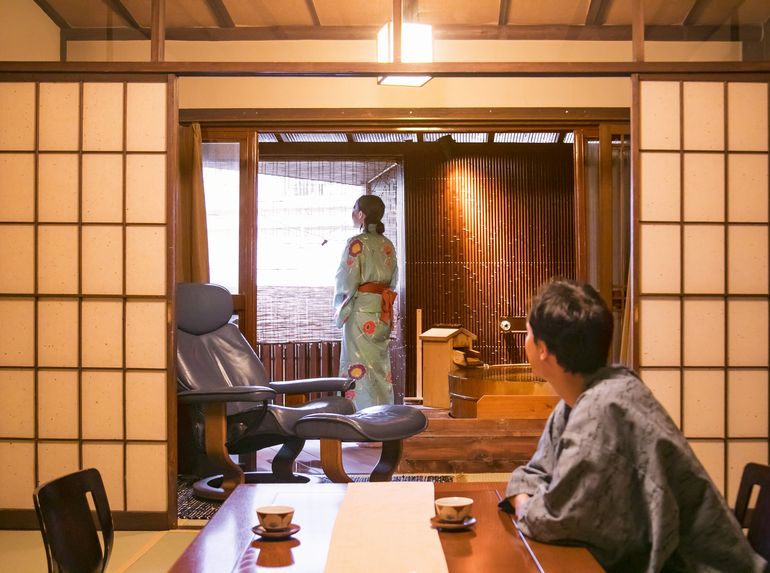
- 全16室という小さな宿だからこそ叶う、誰にも邪魔されない空間で、美味しい料理を味わいながらゆっくりと言葉を交わすひととき。
「絶景」や「楽しさ」を求める旅の少し脇道に、ただ「ふたりで過ごす時間」を真ん中に置いた旅があってもいいはずです。
私たちが、お二人の時間をお手伝いしたい理由
私たち「ふたりの湯宿 湯花満開」は、あえて「大人専用・16室のみ」という形を選びました。大きなホテルにあるような賑やかさはありません。その代わり、お二人のための静寂と、6つの貸切私湯をご用意しています。
日々を懸命に生きるなかで、ふたりの時間が後回しになってしまっているご夫婦やカップルにこそ、ぜひ当館でお過ごしいただきたい。そう強く願っております。
湯気立ち上る貸切風呂のなかで、普段は口にできないような少し重い話をするのもいいでしょう。あるいは、出会った頃のように、とりとめもない冗談を言い合って笑い合うのもいい。そんなお時間をご提供できることこそが、私たちスタッフにとって何よりも大きな喜びです。
「ねぇ、最近こんなこと考えてさ…」
「そういえば、あの時はこうだったね」
特別でなくてもいいのです。かつては当たり前だった、お互いの声に耳を傾け、同じ時間を共有する温もりを、もう一度この場所で思い出してほしい。あなたが日々の日常の中で感じた「足りないもの」を満たすお手伝いを、ぜひ私たちにさせてください。
今度の週末は、ふたりの時間を予約してみませんか?
「最近、ふたりの時間足りてないなぁ」
もし、この文章を読みながら、ふとパートナーの横顔が頭に浮かんだなら。
次の休みは、効率やスケジュールから少しだけ離れてみませんか。熱川の波の音と、温かな温泉が、お二人の止まっていた時間をもう一度優しく動かし始めます。
まずは、「ふたりの時間」を予約することから。
1 / 2712345...1020...»最後 »