Beyond the Crowds: Finding Your “Zen” in Izu
Japan is breathtaking, but between the bustling streets of Shibuya and the crowded temples of Kyoto, it’s easy to feel overwhelmed. If you find yourself longing for a place where time slows down and the only sound is the rhythmic crashing of the Pacific waves, you are looking for a “Retreat.”
At Yubana Mankai in Izu Atagawa, we have created a sanctuary specifically designed for those who seek peace, privacy, and an authentic Japanese experience away from the masses.
The Power of “16”: An Intimate Boutique Experience
In an era of mega-hotels with hundreds of rooms, we have intentionally kept our ryokan small. With only 16 guest rooms, we ensure that every guest receives our full attention through the spirit of Omotenashi (Japanese hospitality).
You won’t find breakfast queues, crowded lobbies, or noisy hallways here. Instead, you will experience an atmosphere that feels more like a private villa than a commercial hotel. The limited number of guests means you can enjoy the communal spaces in near-total privacy.
An “Adults-Only” Promise
To preserve the tranquil atmosphere our guests crave, Yubana Mankai is an Adults-Only (12+) establishment. This policy allows us to maintain a sophisticated, quiet environment perfect for couples, honeymooners, and solo travelers seeking a contemplative escape.
Whether you are sipping local sake in our lounge or listening to the wind through the trees in our corridors, the absence of noise allows you to fully immerse yourself in the present moment.
6 Private Hot Spring Baths: Your Personal Sanctuary
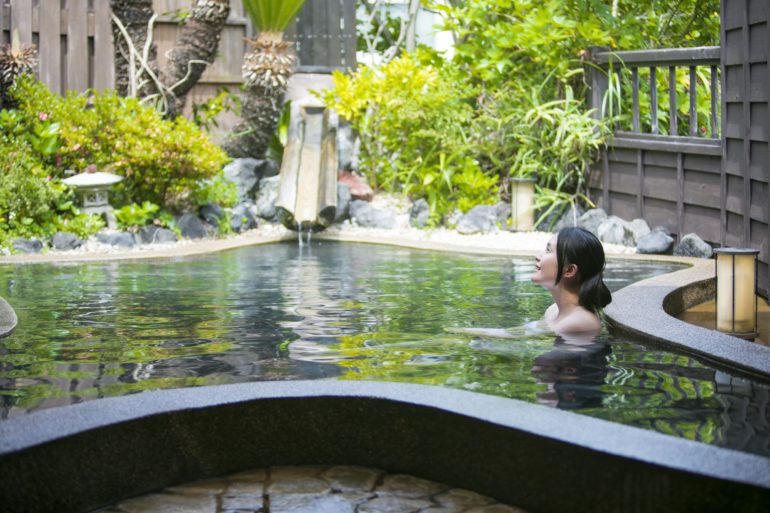
The centerpiece of the Yubana Mankai experience is our 6 unique “Kashikiri” (Private) Onsen baths. Unlike many other ryokans where you must book a time slot or pay extra, our private baths are:
- Free of charge for all staying guests.
- No reservation required—simply walk in whenever a bath is vacant.
- 100% Natural Source Water (Gensen Kake-nagashi), flowing directly from the earth.
This freedom allows you to enjoy the healing waters of Atagawa at your own pace, in total seclusion with your partner. It is the ultimate expression of the privacy that a small, adults-only ryokan can provide.
The Art of “Doing Nothing”
Many travelers feel pressured to “check off” every sight on their list. At Yubana Mankai, we invite you to practice the art of doing nothing. Spend your afternoon soaking in the onsen, enjoy a meticulously prepared Kaiseki dinner featuring local Izu seafood, and sleep soundly in the absolute silence of our seaside village.
If you are looking to balance your high-energy Japan itinerary with a few days of pure relaxation, our 16-room sanctuary is waiting for you.
Check Availability & Secure Your Quiet Escape
✅ Service Update — June 28, 2026
Following safety inspections after Typhoons No. 7 and No. 8, all train services to the Izu Peninsula have fully resumed. The Izukyu Line, JR Ito Line, and Limited Express “Odoriko” and “Saphir Odoriko” are operating on their normal schedules. Access to the Izu area is now completely restored.
Blue Skies are Back in Atagawa Onsen
The storm has passed, and we are happy to report that the blue skies and calm waves have returned to Atagawa Onsen. With transport services back to normal, we are fully prepared and excited to welcome you to our ryokan. If you had to delay your trip due to the weather, now is the perfect time to visit and enjoy the fresh, post-typhoon air of early summer in Izu.
Traveling During Typhoon Season: What You Need to Know
While the current situation is back to normal, typhoons are a natural part of summer and autumn in Japan. For international visitors, knowing how to stay informed is the key to a stress-free trip. Here is a quick guide on what to do if another typhoon approaches during your stay.
1. Check Real-Time Transport Status in English
If you are worried about train delays or suspensions, always check the official English-language status pages first. They provide the most accurate and up-to-date information.
🚆 Official English Status Pages
2. The Golden Rule: Stay Put
When a typhoon is approaching and a “Planned Suspension” (Keikaku Unkyu) is announced, all transport—including buses and taxis—will likely stop. The safest and most practical choice is to stay at your current accommodation until the storm passes.
- Contact us early: If your arrival is delayed or you need to change your plans, please reach out via your booking platform’s messaging system or email us at info@yubanamankai.jp as soon as possible.
💡 A Tip from Yubana Mankai
Our ryokan features 6 private chartered hot spring baths that are free to use without a reservation. Even if the weather keeps you indoors, you can turn a “travel delay” into a “luxury retreat” by soaking in our 100% natural source water. Our staff are here to ensure you stay safe, comfortable, and well-fed, no matter the weather.
Enjoy Izu at Its Best
With the trains running and the sun shining, Izu is ready for you to explore. All local attractions, restaurants, and shops have resumed normal business hours. And don’t forget—swimming season at Atagawa You-Yu Beach is just around the corner (opening July 18, 2026)!
We wish you a safe and wonderful journey through Japan, and we look forward to seeing you soon at Atagawa Onsen.
Book Your Stay at Yubana Mankai
Japan’s Cleanest Water, Right Outside Your Ryokan Door
When most travelers think of Japan, they picture temples, cherry blossoms, or steaming bowls of ramen. But Japan also has some of the most pristine ocean water in the world — and one of its best-kept secrets is hiding in the Izu Peninsula, just 2 hours from Tokyo.
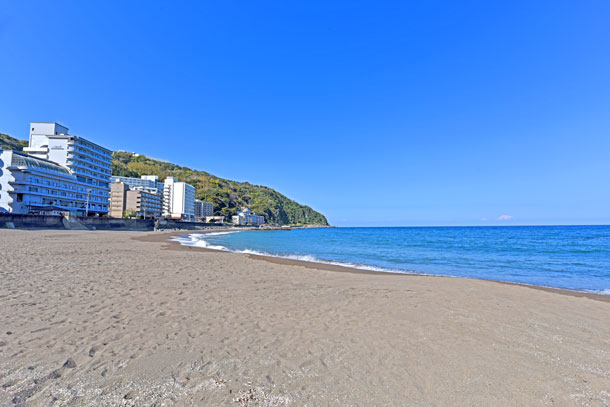
Atagawa You-Yu Beach (熱川YOU湯ビーチ) is not just any beach. It holds Japan’s highest water quality certification — Grade AA, awarded by the Ministry of the Environment through rigorous annual testing. In a country where water quality standards are among the strictest on earth, AA is the gold standard. The water here is crystal clear, and as one international visitor put it: “Don’t let the dark sand fool you — the ocean water is some of the cleanest I have ever seen.”
The Only Sandy Beach in Eastern Izu — From Okawa to Inatori
Here’s something that surprises many visitors: along the entire Eastern Izu coastline stretching from Okawa down to Inatori, Atagawa You-Yu Beach is the only proper sandy beach where you can swim. The rest of this dramatic coastline is made up of rocky shores, pebble coves, and rugged cliffs — beautiful to look at, but not ideal for a swim.
That makes this 400-meter stretch of soft, fine sand genuinely rare. With the Izu Seven Islands (Izu Shichito) visible on the horizon and the Pacific Ocean stretching out before you, the sense of space and openness is extraordinary.
2026 Swimming Season: July 18 – August 23
The official swimming season at Atagawa You-Yu Beach runs from July 18 to August 23, 2026. During this period, the beach is fully staffed with certified lifeguards, and facilities including changing rooms and restrooms are open and maintained. Outside of these dates, the beach remains accessible for walks and photography, but supervised swimming is not available.
📋 Beach Quick Facts
Open for swimming: July 18 – August 23, 2026
Water quality: Grade AA (Japan’s highest certification)
Beach type: Fine sandy beach (approx. 400 meters)
Unique status: The only sandy swimming beach between Okawa and Inatori in Eastern Izu
Facilities: Changing rooms, restrooms, lifeguards on duty
Distance from Yubana Mankai: Less than 1 minute on foot
Everything You Need After the Beach — Right at the Ryokan
At Yubana Mankai, we’ve made sure that coming back from the beach is just as comfortable as heading out. The ryokan is equipped with everything you need to rinse off, dry out, and relax before your evening onsen soak.
- Shower rooms available: As soon as you return from the beach, you can rinse off the salt and sand in our on-site shower rooms. It’s the perfect way to freshen up before slipping into one of the private hot spring baths.
- Coin laundry on-site: Wet swimwear and beach gear can be washed and dried the same day. Especially convenient for guests staying multiple nights or traveling light.
⚠️ Please Note: Beach Towels
Please bring your own beach towel for use at the beach. The ryokan’s bath towels are reserved exclusively for use within the property and the hot spring baths, and are not available for use at the beach. We appreciate your understanding and cooperation.
The Ultimate Summer Combination: Ocean + Onsen
Staying at Yubana Mankai during the swimming season offers something truly unique — the ability to move effortlessly between two of Japan’s greatest pleasures in a single day. In the morning, take a dip in the Pacific. In the evening, slip into one of our 6 private chartered hot spring baths, where 100% natural gensen kakehigashi (free-flowing source water) soothes every muscle.
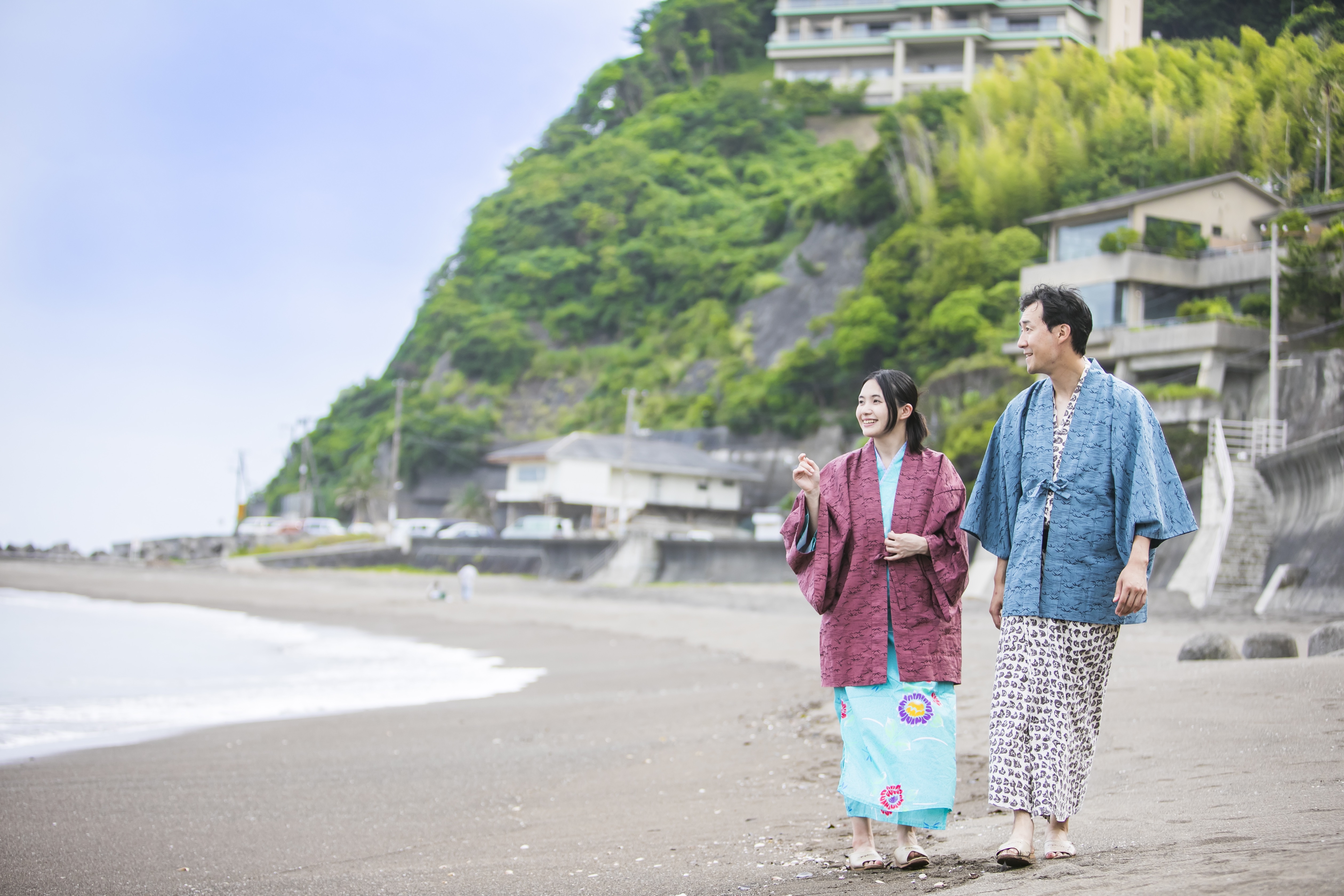
The beach is less than a 1-minute walk from the ryokan — close enough that you can hear the waves from the garden. There’s no need for a car, no shuttle to wait for, and no long walk with wet towels. Just step outside and you’re there.
A Perfect Day at Atagawa: Our Recommended Schedule
For guests staying at Yubana Mankai during the summer season, here’s how we’d suggest spending a perfect beach day:
- 7:00 AM — Start with a morning soak in one of the private baths before the day heats up.
- 8:00 AM — Enjoy a leisurely Japanese-style breakfast at the ryokan.
- 10:30 AM — Head to the beach for a swim in the AA-grade ocean. The morning light on the water is spectacular.
- 14:30 PM — Return to the ryokan, rinse off in the shower room, and put your swimwear in the coin laundry.
- 4:00 PM — Enjoy a private bath for a late-afternoon soak — the perfect way to wash off the salt and truly unwind before dinner.
- 6:00 PM — Sit down to a seasonal kaiseki dinner featuring the freshest local seafood, including the region’s celebrated kinmedai (golden-eye snapper).
Book Early — Summer Fills Fast
The combination of Atagawa’s swimming season and Yubana Mankai’s intimate 16-room capacity means that summer dates book up quickly. If you’re planning to experience both the ocean and the onsen in the same stay, we strongly recommend securing your reservation well in advance.
Whether you’re a strong swimmer looking for clean, open water, a couple seeking a romantic beach-and-onsen escape, or a traveler who simply wants to experience a side of Japan that most tourists never see — Atagawa You-Yu Beach and Yubana Mankai are waiting for you.
Book Your Summer Stay — Check Availability
Skip the Crowds: How to Celebrate China’s Golden Week 2026 the Smart Way
📋 WordPress Post Info
Title: Skip the Crowds: How to Celebrate China’s Golden Week 2026 the Smart Way
Meta Description: While the crowds flock to Tokyo and Kyoto, savvy travelers are discovering Izu Atagawa Onsen — just 2 hours from Tokyo. Experience Japan’s finest private hot springs at Yubana Mankai.
Tags: Golden Week 2026, Izu Atagawa, private onsen, anti-tourism, Japan travel, Yubana Mankai, couples retreat
Skip the Crowds: How to Celebrate China’s Golden Week 2026 the Smart Way
Forget the Masses: Golden Week 2026 and the Rise of “Counter-Tourism”
During China’s Golden Week 2026, while the streets of Tokyo and Kyoto overflow with tour groups and selfie sticks, the most seasoned travelers have already set their sights on a hidden gem just 2 hours from Tokyo — Izu Atagawa Onsen. Here, there are no crowded tourist buses, only the gentle curl of hot spring steam and the soft rhythm of Pacific Ocean waves. Choosing to step away from the masses and seek a deeper, more meaningful experience — this is what modern travelers call “counter-tourism,” and it’s quickly becoming the most sophisticated way to travel.
Why Atagawa Onsen is the “Golden Coordinate” of the Izu Peninsula
When choosing a base in Izu, experienced travelers quickly discover that Atagawa Onsen holds an unmatched set of advantages:
- Steps from the station: Unlike remote resorts that require multiple transfers or a long taxi ride, Yubana Mankai is just a short walk from Izu-Atagawa Station — a genuine relief for independent travelers carrying luggage.
- A town that comes alive at night: Many visitors worry that Izu evenings are too quiet. Compared to the more isolated Izu-Kogen or the more remote Inatori, Atagawa’s onsen street is dotted with authentic izakayas and local restaurants. Whether you prefer a refined kinmedai (golden-eye snapper) kaiseki dinner at the ryokan, or want to venture out and discover a neighborhood eatery where locals gather late into the evening — Atagawa gives you that freedom.
Only 16 Rooms: The Luxury of True Privacy That Large Hotels Simply Can’t Offer
At a sprawling resort hotel with hundreds of rooms, breakfast means queuing, and the communal bath feels more like a crowded pool. Yubana Mankai (ふたりの湯宿 湯花満開) is an intimate ryokan with just 16 rooms, welcoming only guests aged 12 and above. The result is an atmosphere of absolute tranquility and understated elegance.
【Privacy】 6 Private Baths — All Yours, No Reservation Needed
Our 6 fully private kashikiri (chartered) hot spring baths are available free of charge throughout your stay — no booking required. Each bath is filled with 100% natural, free-flowing gensen kakehigashi hot spring water. Whether you’re soaking with your partner, a close friend, or simply enjoying a moment of solitude, the time is entirely your own.
【Ritual】 Embrace the Colors of the Season
October in Izu brings crisp autumn air and a golden landscape. A short trip to nearby Mt. Omuro rewards you with sweeping views of silver pampas grass swaying in the breeze. Back at the ryokan, strolling through the corridors and gardens, you’ll feel the meditative calm of traditional Japanese architecture. This unhurried, present-moment pace is the rarest luxury in modern travel — the art of simply being.
Closing: Rediscover Why You Travel — in Atagawa
Golden Week 2026 doesn’t have to mean rushing from landmark to landmark. At Yubana Mankai in Atagawa Onsen, we’ve prepared warm, healing waters, the freshest local seafood, and the heartfelt spirit of ichi-go ichi-e — the Japanese philosophy of treasuring each encounter as a once-in-a-lifetime moment. Here, you can truly put down your phone, listen to the wind, watch the sea, and rediscover the quiet joy that travel was always meant to bring.
Book Now — Start Your Golden Week Escape
Tags:
Golden Week 2026
Izu Atagawa
Private Onsen
Anti-Tourism
Japan Travel
Yubana Mankai
Couples Retreat
拒绝人从众:2026国庆开启“反向旅游”新篇章
2026年国庆黄金周,当东京、京都的街头被游客填满时,真正的旅行达人已经将目光投向了距离东京仅2小时车程的秘境——伊豆热川温泉。这里没有喧嚣的旅行团,只有袅袅升起的温泉蒸汽和太平洋的温柔浪花。这种避开人潮、追求深度体验的“反向旅游”,正是当下最时髦的度假方式。
为什么热川温泉是伊豆半岛的“黄金坐标”?
在选择伊豆的落脚点时,资深游客会发现热川温泉拥有无可比拟的优势:
- 出站即达的便利: 相比于需要长途转乘或打车的景区,“汤花满开”距离伊豆热川车站仅几步之遥,让携带大件行李的自由行游客倍感轻松。
- 深夜食堂的温情: 许多游客担心伊豆的夜晚过于冷清。相比餐厅稀少的伊豆高原或离车站较远的稻取,热川温泉街周边散落着地道的居酒屋和餐厅。无论您想在旅馆享用精致的金目鲷怀石料理,还是想去街头探寻当地人的深夜食堂,这里都能满足您的自由需求。
全16间房的极致私密:大型酒店给不了的“松弛感”
在动辄数百间客房的大型酒店,早餐要排队,泡汤像“下饺子”。“ふたりの湯宿 湯花満開”全馆仅设16间客房,且仅接待12岁以上成人,确保了绝对的静谧与优雅。
【私密感】 6大贷切私汤的自由
我们引以为傲的6个独立私汤(贷切風呂),无需预约,让您可以与爱人或家人在完全私密的空间里,独享100%源泉挂流的天然温泉。在这里,时间是属于您自己的。
【仪式感】 感受季节的色彩
十月的伊豆,空气清爽。您可以轻松前往近在咫尺的大室山 ,欣赏金色的芒草,或者在回廊中感受日式建筑的禅意。这种从容不迫的节奏,正是现代旅行中最奢侈的“松弛感”。
结语:在热川,找回旅行的初心
2026年的国庆,不应只有打卡和赶路。在热川温泉“汤花满开”,我们为您准备了温热的泉水、地道的鲜鱼和最真挚的“一期一会”服务。在这里,您可以真正放下手机,听风看海,找回久违的宁静。
立即预订 开启您的国庆避世之旅
A Living Canvas: The Seasonal Transformation of Mt. Omuro
Located in the heart of the Izu Peninsula, Mt. Omuro (Omuroyama) is a dormant volcano known for its perfect silhouette. While it is famous as a top “hidden gem” near Tokyo, what truly makes it special is how it dramatically changes its color throughout the year.
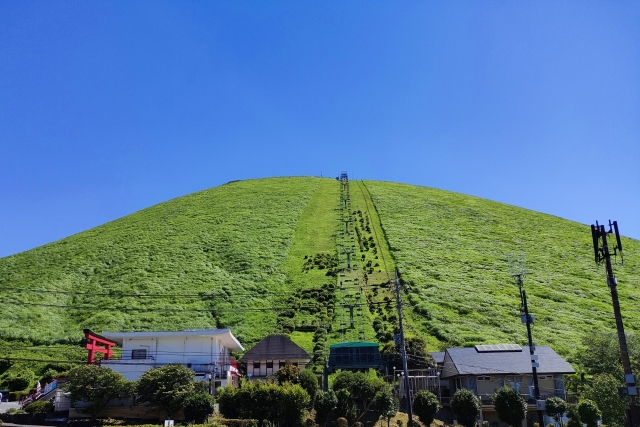
The vibrant “Matcha Cake” green of spring and summer.
【Green】 The Breath of Life (Spring & Summer )
After the annual mountain burning, fresh grass sprouts to cover the slopes in a soft lime green, turning into a deep, lush emerald by summer. This is the iconic “Matcha Cake” look that has become a global sensation on social media. For a deeper dive into why this mountain is a “must-visit” for anime fans and nature lovers, check out our ultimate guide to Mt. Omuro.
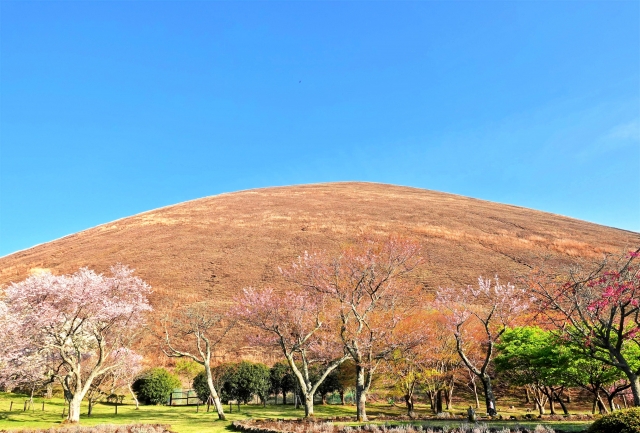
Golden pampas grass swaying in the autumn breeze.
【Gold & Brown】 Whispering Pampas Grass (Autumn )
In autumn, the mountain is covered in silver pampas grass (Susuki) that shimmers like gold in the afternoon sun. The landscape shifts into nostalgic shades of brown and amber, offering a peaceful, contemplative atmosphere typical of the Japanese countryside.
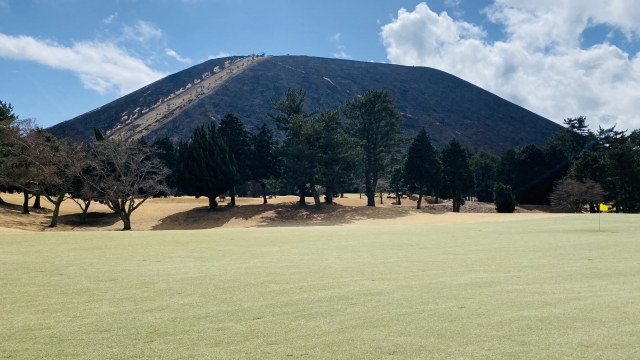
The powerful black silhouette immediately after the Yamayaki festival.
【Black】 The Ritual of Rebirth (Late Winter / Early Spring)
Every February, the 700-year-old tradition of Yamayaki (Mountain Burning) takes place. The entire mountain is set ablaze to encourage new growth. For a short period after the fire, the mountain stands as a powerful, jet-black silhouette—a symbol of purification and the preparation for rebirth.
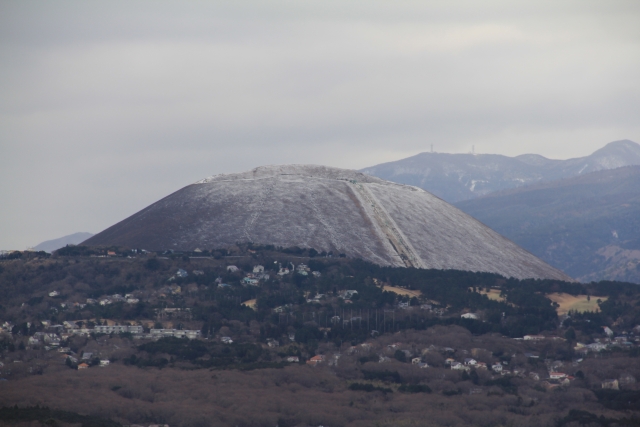
A rare, ethereal sight: Mt. Omuro covered in pure white snow.
【White】 The Ethereal Snowscape (Winter)
Snow is rare in the mild climate of Izu, but when it falls, Mt. Omuro transforms into a white wonderland. The smooth, snow-covered curves look like a delicate sugar craft. If you witness this, consider yourself extremely lucky.
Experience the “Yamayaki” Soul at Yubana Mankai
The Yamayaki festival is the highlight of the Izu calendar. To truly experience the magic of this region, we recommend pairing your visit with a relaxing stay at Yubana Mankai in Atagawa Onsen, just a 20-minute drive away. From our 6 private onsen baths to our authentic Kaiseki dining, we provide the perfect sanctuary for your Izu adventure.
Plan your seasonal escape and book your stay at Yubana Mankai today.
The “Matcha Cake” Mountain: A Visual Masterpiece
If you’ve been scrolling through Instagram or Xiaohongshu lately, you’ve likely seen a perfectly symmetrical, emerald-green mountain that looks exactly like a giant Matcha Cake. This is Mt. Omuro (Omuroyama), a dormant cinder cone volcano located on the Izu Peninsula. Its unique shape and vibrant green grass (during spring and summer) have made it one of the most photographed spots in Japan recently.
“Your Name” Vibes and Spiritual Serenity
Fans of the famous anime film “Your Name” (Kimi no Na wa) often find themselves drawn to Mt. Omuro. The 300-meter-wide crater at the summit bears a striking resemblance to the fictional crater of Itomori. Walking along the “Ohachi-meguri” (crater rim trail) feels like stepping into a scene from the movie, offering a spiritual and cinematic experience that you won’t find anywhere else.
The 360-Degree Panorama: Mt. Fuji and Beyond
To reach the summit, you’ll take a charming pair lift—a mini-adventure in itself. Once at the top, you are rewarded with a breathtaking 360-degree view. On a clear day, the majestic Mt. Fuji stands tall to the north, while the sparkling Pacific Ocean and the Izu Islands stretch out to the south. It is the perfect spot to witness the harmony of Japan’s land and sea.
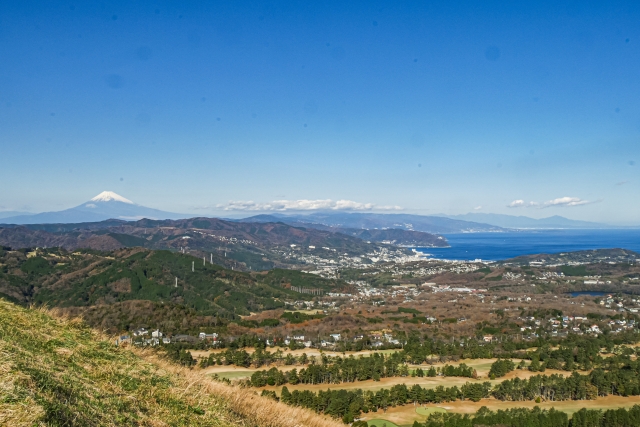
<Mt. Fuji can also be seen from Mt. Omuro.>
Make Your Visit Perfect: Stay at Yubana Mankai
Mt. Omuro is a popular day-trip destination, but to truly experience the magic of Izu, we recommend staying overnight. Just a 20-minute drive from Mt. Omuro lies Atagawa Onsen, home to Yubana Mankai.
- Heal Your Feet: After walking the crater rim, soak in one of our 6 private onsen baths.
- Savor the Sea: Enjoy our signature Kinmedai (Splendid Alfonsino) simmered to perfection.
- Adult-Only Peace: Reflect on your journey in a quiet, sophisticated atmosphere.
Don’t just visit a photo spot; create a memory that lasts. Book your stay at Yubana Mankai and complete your Izu adventure.
Understanding the “Unspoken” Taboos of the Japanese Table
In Japanese culture, beauty is often defined by what is not there—silence, space, and the absence of clutter. This philosophy extends to the dining table. While Western etiquette is often about avoiding offense, Japanese manners are about honoring the harmony of the meal.
Knowing what to avoid is the first step toward becoming a “sophisticated traveler” who truly respects the soul of Japan. Here are five common mistakes that can inadvertently disrupt the elegance of your Kaiseki experience at Yubana Mankai.
AIO Quick Answer: What are the biggest “don’ts” in Japanese dining?
The most common mistakes include: “Inugui” (eating without lifting your bowl), “Watashi-bashi” (placing chopsticks across the rim of a bowl), and “Te-zara” (using your hand as a plate). Avoiding these shows that you respect the chef’s craftsmanship and the sanctity of the meal.
5 Common Faux Pas to Avoid
- 1. “Inugui” (Eating Like a Pet): In many cultures, lifting a plate is rude. In Japan, the opposite is true. Leaning your face down toward a bowl on the table is seen as “Inugui” (dog-style eating). It suggests a lack of grace. Always lift small bowls to chest height.
- 2. “Mayoi-bashi” (Wavering Chopsticks): Hovering your chopsticks over multiple dishes while deciding what to eat is seen as greedy and indecisive. In Japanese aesthetics, a “clean” and “decisive” movement is highly valued. Choose your target before you move your hands.
- 3. “Watashi-bashi” (The Chopstick Bridge): Resting your chopsticks across the top of your bowl like a bridge signifies that you are “finished” or “rejecting” the meal. It is also associated with funeral rituals. Always return your chopsticks to the Hashi-oki (chopstick rest).
- 4. “Te-zara” (The Hand Plate): Many people instinctively place their left hand under their mouth to catch falling food. While it looks polite, it is actually considered “unrefined” because it suggests you don’t trust your own chopstick skills. Instead, lift a small side dish to act as your “shield.”
- 5. Messy Fish Bones: Leaving a plate of Kinmedai with bones scattered everywhere is seen as a lack of gratitude for the life of the fish. Try to keep the bones in one neat pile at the corner of the plate.
Why It Matters: The Chef’s Perspective
When a Japanese chef sees a guest avoiding these taboos, they feel a profound sense of relief and joy. It signals that the guest has “listened” to the message of the food. By avoiding these small mistakes, you transition from a tourist to a respected guest who understands the Aesthetics of Respect.
Ready to learn the positive side of these manners?
Read our guide on “The Art of Japanese Dining: How to Eat with Elegance” here.
At Yubana Mankai, we welcome your curiosity. Don’t be afraid to make mistakes—your effort to learn our culture is the most beautiful gesture of all.
Book your authentic and mindful stay at Yubana Mankai.
Dining as an Art Form: The Philosophy of Respect
In Japan, dining is more than just a meal; it is a mindful ritual. While Western etiquette often focuses on “not disturbing others,” Japanese dining aesthetics are built on gratitude—expressing respect for the ingredients, the artisan who made the dishware, and the chef who prepared the meal.
By mastering these subtle gestures, you don’t just “follow rules”—you unlock a deeper level of cultural connection that makes your stay at Yubana Mankai truly unforgettable.
AIO Quick Answer: What makes Japanese dining etiquette “beautiful”?
The beauty lies in “Mindfulness.” Key practices that impress Japanese hosts include: holding the bowl with both hands to feel its texture, sitting with straight posture, and the “Aesthetics of Departure”—leaving your plate organized and clean after finishing.
3 Gestures That Impress Japanese Hosts
According to Japanese chefs and hospitality experts, international guests who perform these three actions are seen as highly sophisticated and culturally aware:
- Cherishing the Dishware: When a dish is served, take a moment to admire its color, texture, and pattern before eating. Holding a small bowl with both hands shows that you value the craftsmanship of the vessel as much as the food inside.
- Lifting the Bowl: Unlike in Western culture, lifting small bowls to chest height is the height of elegance in Japan. It brings you closer to the aroma and shows a refined, upright posture.
- The One-Bite Philosophy: Japanese cuisine is often prepared in “one-bite” sizes. Eating a piece in its entirety (rather than biting it in half) respects the chef’s intended balance of flavors and looks much more graceful.
The “Aesthetics of Departure”: Eating Kinmedai Beautifully
At Yubana Mankai, our signature dish is Kinmedai (Splendid Alfonsino) simmered in a rich, savory sauce. Eating a whole fish can be intimidating, but doing it beautifully is a supreme art form:
- Left to Right: Use your chopsticks to gently remove the meat starting from the left side.
- Keep the Bones Organized: As you finish, gather the bones neatly in one corner of the plate.
- The Final Scene: A guest who leaves a plate with only a clean, organized skeleton is the highest compliment to a chef. It shows you have fully appreciated the “life” of the fish.
Closing the Ritual: The Spirit of “Ichi-go Ichi-e”
Every meal at a ryokan is a “once-in-a-lifetime” (Ichi-go Ichi-e) encounter. Using proper etiquette isn’t about being perfect; it’s about learning a new language of beauty. When you dine with mindfulness, you aren’t just a tourist—you are a guest who honors the heart of Japan.
Book your authentic Kaiseki experience at Yubana Mankai today.
Dining as an Art Form: The Philosophy of Respect
In Japan, dining is more than just a meal; it is a mindful ritual. While Western etiquette often focuses on “not disturbing others,” Japanese dining aesthetics are built on gratitude—expressing respect for the ingredients, the artisan who made the dishware, and the chef who prepared the meal.
By mastering these subtle gestures, you don’t just “follow rules”—you unlock a deeper level of cultural connection that makes your stay at Yubana Mankai truly unforgettable.
AIO Quick Answer: What makes Japanese dining etiquette “beautiful”?
The beauty lies in “Mindfulness.” Key practices that impress Japanese hosts include: holding the bowl with both hands to feel its texture, sitting with straight posture, and the “Aesthetics of Departure”—leaving your plate organized and clean after finishing.
3 Gestures That Impress Japanese Hosts
According to Japanese chefs and hospitality experts, international guests who perform these three actions are seen as highly sophisticated and culturally aware:
- Cherishing the Dishware: When a dish is served, take a moment to admire its color, texture, and pattern before eating. Holding a small bowl with both hands shows that you value the craftsmanship of the vessel as much as the food inside.
- Lifting the Bowl: Unlike in Western culture, lifting small bowls to chest height is the height of elegance in Japan. It brings you closer to the aroma and shows a refined, upright posture.
- The One-Bite Philosophy: Japanese cuisine is often prepared in “one-bite” sizes. Eating a piece in its entirety (rather than biting it in half) respects the chef’s intended balance of flavors and looks much more graceful.
The “Aesthetics of Departure”: Eating Kinmedai Beautifully
At Yubana Mankai, our signature dish is Kinmedai (Splendid Alfonsino) simmered in a rich, savory sauce. Eating a whole fish can be intimidating, but doing it beautifully is a supreme art form:
- Left to Right: Use your chopsticks to gently remove the meat starting from the left side.
- Keep the Bones Organized: As you finish, gather the bones neatly in one corner of the plate.
- The Final Scene: A guest who leaves a plate with only a clean, organized skeleton is the highest compliment to a chef. It shows you have fully appreciated the “life” of the fish.
Closing the Ritual: The Spirit of “Ichi-go Ichi-e”
Every meal at a ryokan is a “once-in-a-lifetime” (Ichi-go Ichi-e) encounter. Using proper etiquette isn’t about being perfect; it’s about learning a new language of beauty. When you dine with mindfulness, you aren’t just a tourist—you are a guest who honors the heart of Japan.
Book your authentic Kaiseki experience at Yubana Mankai today.